

Why Should Senior Citizens Perform Balance Exercises?
As you get older, keeping your balance is key for staying independent. The Mayo Clinic Staff says doing balance exercises can lower fall risks. But have you thought about how these exercises can change your daily life?
Imagine walking without fear of falling and staying independent as you age. This is true for many seniors who do balance exercises every day. So, how can you start improving your balance today?
Learning about the benefits of balance exercises for elderly people is a great first step. You can start with simple exercises at home. This makes it easier to stay balanced and enjoy life fully.
Key Takeaways
- Balance exercises can help prevent falls and maintain independence.
- Simple exercises can be done at home to improve balance.
- Regular practice can significantly reduce the risk of injury.
- Improved balance enhances overall well-being and confidence.
- Consult with a healthcare professional before starting any new exercise routine.
Understanding Balance Exercises for Seniors
Keeping your balance is key to doing daily tasks safely and with confidence. As you get older, adding balance exercises to your routine can really help your health.
What Are Balance Exercises?
Balance exercises are activities that help you stay steady and in control. They can be simple, like standing poses, or more challenging. The National Institute on Aging says balance training is important for seniors. It helps prevent falls and injuries.
The Importance of Balance for Your Health
Good balance is vital for your health. It lets you do daily tasks safely. Good balance lowers the chance of falls, which are a big risk for seniors. It also boosts your confidence when moving around.
Improving your balance means less risk of falls. It also makes you more mobile and independent. This leads to a healthier, more active life.
Benefits of Balance Exercises
Balance exercises are great for older people. They help keep you safe and independent. Doing these exercises every day can lower your chance of falling and getting hurt.
Preventing Falls and Injuries
Falls are a big worry for seniors. Over 25% of adults 65 or older fall each year. Balance exercises can help prevent falls by making you more stable and quick to react. Simple moves like standing on one foot or walking in a straight line can help a lot.
Doing balance exercises regularly can also make you less scared of falling. This is because you’ll be better at staying balanced. This means you can keep doing things you love without worrying.
Enhancing Mobility and Independence
Balance exercises do more than just prevent falls. They also enhance your mobility. Being better at balance means you can walk more confidently and do everyday tasks easily. This helps you stay active and healthy.
Also, good balance lets you do fun physical activities. This makes you feel happy and independent.
Boosting Confidence
Doing balance exercises can really boost your confidence. As you get better at balance, you’ll feel more sure of yourself. This makes you more confident in doing daily tasks and joining in social activities.
This confidence can improve many parts of your life. It can help you stay active, keep up hobbies, and enjoy life more.
How Balance Exercises Improve Your Daily Life
Balance exercises are key to a better life and more independence. Adding a senior balance workout routine to your day can boost your health. The Mayo Clinic Staff says these exercises make daily tasks easier for seniors.
Daily Activities Made Easier
Balance exercises help a lot with daily tasks. Walking, climbing stairs, or standing up becomes easier. This is because these exercises strengthen muscles and improve stability.
With better balance, you can do your daily tasks with more confidence. You might find it easier to carry groceries or play with your grandkids. Even moving around your home becomes less tiring.
Maintaining an Active Lifestyle
The importance of balance training for seniors is huge for staying active. Better balance means you can keep doing things you love, like gardening or dancing. It also makes you feel better mentally.
Staying active through balance exercises keeps you connected with others. You can join fitness classes or go on outings with friends. This way, you don’t have to worry about feeling unsteady.
By adding balance exercises to your routine, you improve your health and life quality. This active approach to aging can make your life more fulfilling.
Different Types of Balance Exercises
To get better at balance, it’s key to know the different kinds of exercises. Balance workouts are split into many types. Each one is made to boost your stability and health.
Static Balance Exercises
Static balance exercises mean standing in one spot. They help make your core stronger and improve balance. Standing on one foot or holding a pose are examples. These are great for getting stable and can be done anywhere.
Dynamic Balance Exercises
Dynamic balance exercises, though, are about moving. You have to move your body in ways that test your balance. Walking a straight line or doing tai chi are examples. These make balance better while moving, making everyday tasks simpler.
Using Assistive Devices
Using tools like canes or walkers can also help with balance. They give extra support, making you feel safer while exercising. It’s crucial to pick the right tool and use it right to get the most out of it.
Adding these balance exercises to your routine can bring many benefits. You’ll see better stability and a lower chance of falls. Whether you like static, dynamic, or assisted exercises, there’s a program for you.
Getting Started with Balance Exercises
Before starting any new exercise, like balance ones, it’s key to prepare well. This makes sure you’re safe and do the exercises right.
Consulting with Health Professionals
Talking to health experts is very important. This is true for seniors, as health issues can change what exercises are safe. Your healthcare provider can give you advice that fits your health, keeping you safe.
Talking to a doctor can also show you what changes to make in your exercises. This is a big step in making a senior balance workout routine just for you.
Setting Realistic Goals
Setting goals that are reachable is also key. First, check where you are with balance and flexibility. Then, aim for small steps that you can do.
Having goals that you can reach will keep you going. It’s also good to celebrate your small wins. This helps you stay excited about your routine.
Knowing why senior citizens should do balance exercises can also help. These exercises are not just to prevent falls. They help you live better, stay independent, and feel more confident.
Creating a Safe Exercise Environment
It’s important for seniors to have a safe place for balance exercises. A safe area helps prevent falls and boosts confidence. This makes it easier to keep up with balance training.
Minimizing Hazards at Home
To make your home safer, remove tripping hazards like loose rugs and cords. Make sure your paths are clear and well-lit. Adding handrails in places like stairways or bathrooms can also help.
Key Areas to Focus On:
| Area | Hazard | Solution |
|---|---|---|
| Living Room | Loose Rugs | Secure or Remove |
| Hallways | Poor Lighting | Install Brighter Lights |
| Bathrooms | Slippery Floors | Use Non-Slip Mats |
Finding the Right Space
Finding a safe and comfy spot for balance exercises is key. Look for a room with a non-slip floor and enough room to move. A smooth, flat surface is best.
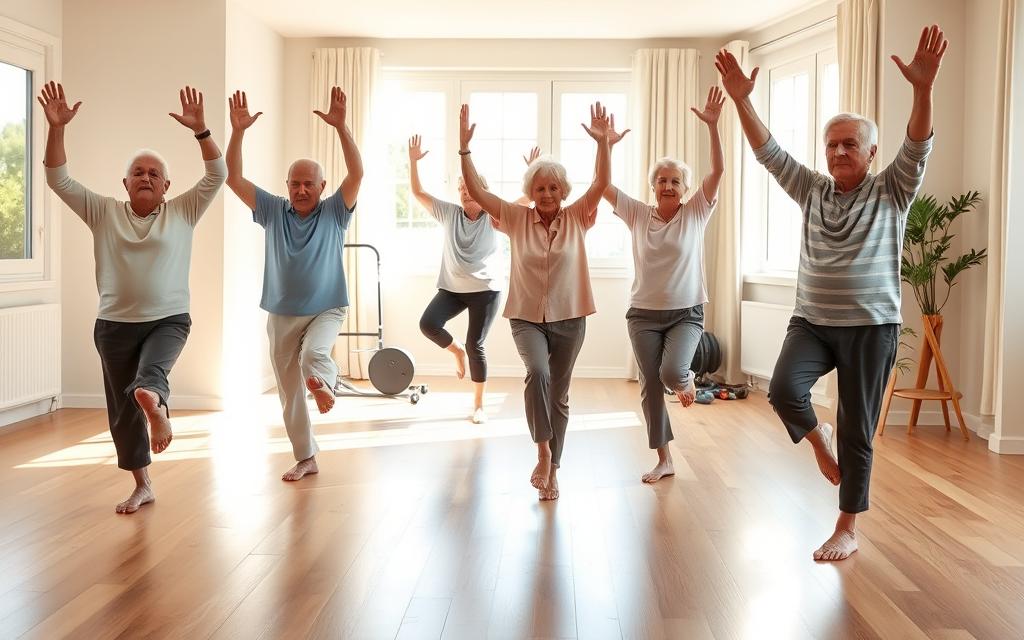
When picking your spot, think about how close it is to walls or handrails. Having something to hold onto is very helpful, even if you’re just starting.
Tip: You can use a chair or counter for support during your exercises.
Crafting a Balance Exercise Routine
Creating a balance exercise routine that fits your life can make you feel better and lower fall risks. Start by thinking about your fitness level, health goals, and any physical limits you have.
Frequency and Duration of Exercises
Frequency and Duration of Exercises
Start with short workouts, 10-15 minutes, and grow them as you get stronger. Begin with 2-3 times a week and try to do it 4-5 times a week as you get more comfortable.
Listening to your body is key; stop if you feel pain or discomfort. Then, talk to a doctor about it.
Mixing It Up for Better Results
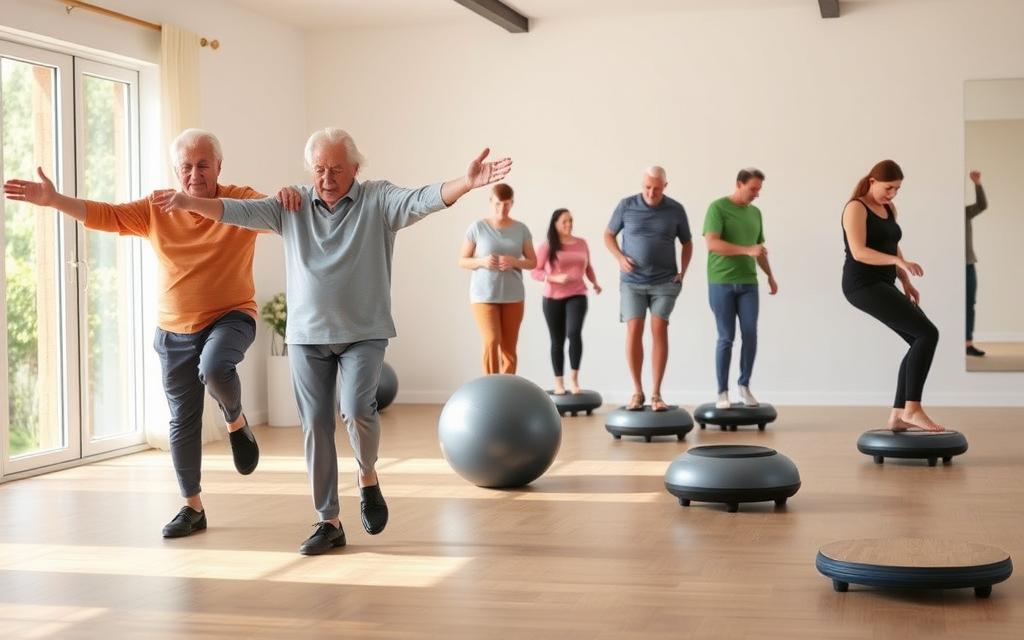
To keep things interesting and avoid getting stuck, mix your balance exercises. Try single-leg stands, heel-to-toe walks, and balance boards. They challenge your body in new ways.
Adding different exercises and making them harder will help you stay balanced. This way, you can make a well-rounded senior balance workout routine that helps you stay steady and lowers fall risks.
Being consistent and patient is important for benefits of balance exercises for elderly people. Stick to your routine, and you’ll see better results over time.
Tips for Staying Motivated
Staying motivated is key for a good balance exercise routine. Starting your balance journey is exciting. It’s important to keep yourself interested and committed.
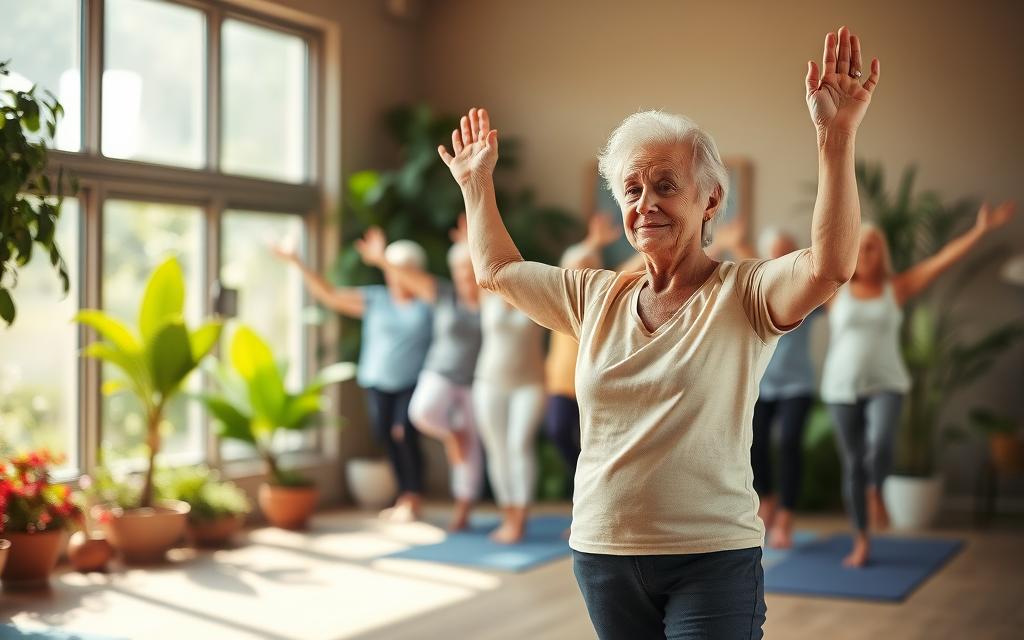
Joining classes or groups for balance exercises is a great idea. It makes working out more fun and connects you with others. Many places offer classes just for older adults. These classes are perfect for learning new moves and staying motivated.
Joining Classes or Groups
Being in a class or group adds a fun social element. You can share tips, learn from others, and get support. Look for local programs made for seniors that focus on balance.
Group classes let you learn from experts in working with older adults. This keeps your routine exciting and prevents boredom.
Tracking Your Progress
Tracking your progress is another great way to stay motivated. Keeping a journal of your exercises shows how far you’ve come. It’s very encouraging.
Tracking helps you see where you need to work harder. It lets you make smart choices about your training. This keeps you motivated to keep improving.
Staying motivated is a journey with ups and downs. But, by joining groups and tracking your progress, you can stay excited about balance exercises. The goal is to make balance training a fun and lasting part of your life.
Overcoming Common Barriers
Starting balance exercises can be tough. You might face obstacles that slow you down. It’s key to know these barriers and how to beat them to reach your balance goals.
Addressing Fear and Anxiety
Fear and anxiety are big hurdles, more so for seniors who’ve fallen before. It’s normal to be scared of falling again. But, staying away from balance exercises can make falls more likely.
First, talk to your doctor to make a plan that fits you. Start with easy exercises in a safe spot, like holding onto a chair. As you get braver, try harder exercises. Remember, every small step counts, and celebrate your wins.
Dealing with Physical Limitations
Chronic pain, arthritis, or mobility issues can make balance exercises hard. But, many exercises can be changed to fit your needs. You can do chair exercises or use canes or walkers for support.
Always listen to your body and don’t do too much. If you hurt, stop right away and see your doctor. They can make a plan that works with your body.
By tackling fear, anxiety, and physical limits, you can beat common barriers to balance exercises. This can help you stay balanced, prevent falls, and improve your life. Adding a senior balance workout routine to your day can be a big step towards preventing falls in the elderly with balance exercises.
Finding Resources for Balance Exercises
As you work on better balance, finding the right resources is key. Today, there are many tools and programs to help. They are designed to improve your balance.
Online Videos and Tutorials
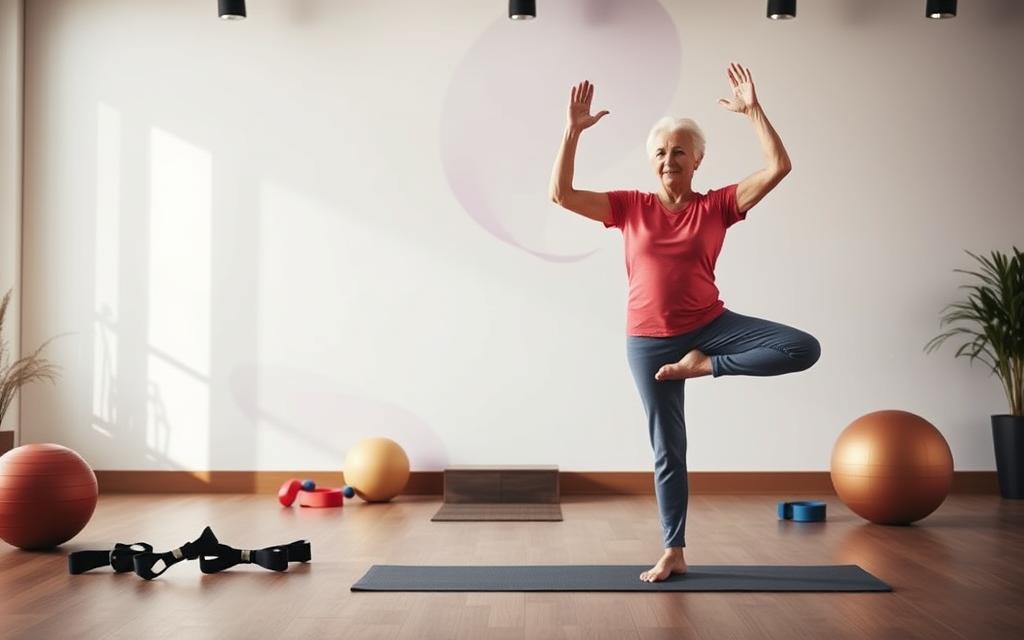
Online videos and tutorials are great for learning new exercises. Websites and platforms have many exercises for seniors. Look for best balance exercises for older adults online.
YouTube channels for senior fitness and websites with exercise guides are good places to start. You can also find online fitness classes for older adults.
Local Community Programs
Local programs are also a great help. Community centers, senior centers, and gyms have classes for older adults. These classes teach balance exercises and help you meet people.
When looking for local programs, find ones that focus on benefits of balance exercises for elderly. This includes preventing falls and improving mobility. Mix online resources with local programs for a balanced routine.
Success Stories: Inspiring Examples
Many seniors have improved their balance and cut down on falls. Their stories show how balance training can change lives. They inspire others to try it too.
Real-Life Transformations
With hard work and the right exercises, you can get better at balance. Seniors have seen big changes. They feel more stable and confident.
Simple exercises like standing on one foot help a lot. Walking in a straight line and using a balance ball also work well. Doing these exercises often can really help.
Creating a Supportive Community
Being with people who support your fitness goals is key. Joining a class for balance exercises can really help. It keeps you motivated and on track.
| Benefits | Individual Practice | Group Practice |
|---|---|---|
| Motivation | Variable | High |
| Support | Limited | Strong |
| Variety of Exercises | Limited to personal routine | Diverse, as guided by instructors |
Doing balance exercises and being part of a supportive group can greatly improve your life. You’ll feel more active and independent.
Conclusion: Your Journey to Better Balance
Adding balance exercises to your daily life can really help. It makes you healthier and more independent. It’s important for seniors to do these exercises to stay active and avoid falls.
Balance exercises bring many benefits. They improve how you move, make you feel more confident, and lower injury risks. The best way to start is to exercise often.
Starting Your Balance Exercise Journey
Begin by talking to health experts to make a plan for balance exercises. Look for local programs or online help too. They can guide you well.
Maintaining a Consistent Routine
Staying regular is important for better balance. Keep exercising to enjoy lasting benefits and stay active and healthy.
Resource:
Senior Chair Exercises for Seniors: Best 10 Seated Chair Workouts
Mayo Clinic Balance Exercise Guide


One thought on “Why Senior Citizens Should Do Balance Exercises”
Comments are closed.