← Back to Ultimate Hobbies for Seniors Guide
20+ Evidence-Based Sit-Down Games for Senior Citizens: A Cognitive Longevity Blueprint
Last Fact-Checked & Enhanced: April 16, 2026| Reflecting 2026 Hobbies & Community Trends
Executive Impact Summary: The Sedentary Engagement Protocol
This technical guide explores the therapeutic application of sit-down games for senior citizens as a primary modality for preserving neuroplasticity. As a core component of our Comprehensive Hobbies for Seniors, these low-impact, high-engagement activities are designed to mitigate the risks of cognitive atrophy and social desynchronization.
Neuro-Stimulation
Leveraging complex rule-following to fortify synaptic density and cognitive reserve.
Cortisol Reduction
Using leisure-based immersion to lower systemic stress and improve emotional regulation.
Author
Expert Verified
At-A-Glance: Therapeutic Play Benefits
Mobility Inclusive
Every activity is curated specifically for limited-mobility environments without sacrificing depth.
Vetted Mastery
Evaluated by geriatric wellness experts to ensure appropriate cognitive load and sensory comfort.
As we navigate the later stages of life, maintaining a robust engagement with our environment is a physiological imperative. Utilizing sit-down games for senior citizens provides a vital pathway for fostering geriatric wellness through low-impact social modalities. These activities are not merely diversions; they are essential tools for sustaining mental acuity and emotional equilibrium.
When structured correctly, sit-down games for senior citizens serve as a cornerstone of a healthy lifestyle, offering an accessible bridge to community interaction. For a broader look at how these fit into a comprehensive lifestyle, explore our Ultimate Guide to Hobbies for Seniors.
Key Takeaways for Active Aging
- Neuroplasticity Support: Discover how specific modalities stimulate synaptic growth.
- Social Inclusion: Explore varied formats that dismantle the barriers of geriatric isolation.
- Wellness Integration: Learn the physiological benefits of consistent mental play.
- Adaptive Accessibility: Identify activities that accommodate visual and tactile sensitivities.
The Neuro-Biological Benefits of
Sit-Down Games for Senior Citizens
In the field of gerontology, the consistent application of sit-down games for senior citizens is recognized for its ability to enhance cognitive reserve. This protective layer of mental resilience helps the brain withstand age-related changes by diversifying neural pathways.
Enhancing Cognitive Function and Executive Control
Strategic play requires high-level executive functions, including working memory and inhibitory control. Puzzles and board-based challenges serve as “brain gymnasiums,” forcing the prefrontal cortex to process complex variables. This sustained focus is a documented method for slowing the progression of memory-related challenges.
Fostering Reciprocal Social Connections
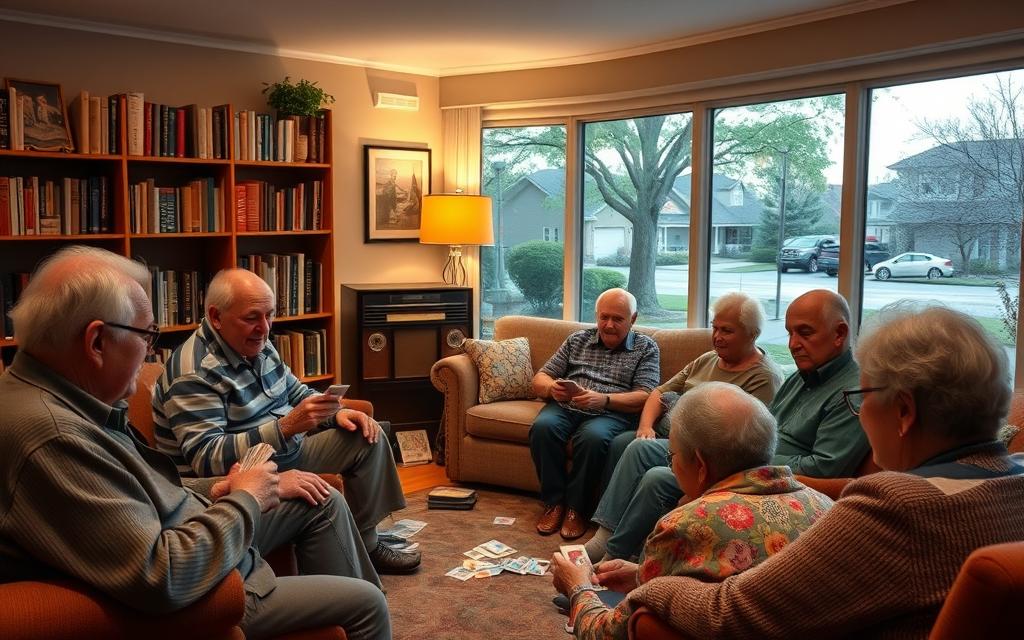
Meaningful social interaction is the primary antidote to the loneliness epidemic in older populations. Engaging in elderly-specific modalities provides a low-pressure environment for verbal exchange and emotional bonding. Whether in a private residence or a community center, these moments build the foundational “social safety net” essential for long-term health.
Neuro-Endocrine Stress Reduction
Participating in leisure activities lowers systemic cortisol levels and triggers the release of dopamine. By shifting the focus away from external stressors, these activities offer a meditative state of “flow” that improves overall mood and reduces anxiety.
Curated Sit-Down Games for Senior Citizens:
Modalities for Every Ability
Selecting the appropriate sit-down games for senior citizens involves matching the cognitive load of the activity to the participant’s current energy levels. From tactile board challenges to digital interfaces, the options for geriatric wellness are vast and varied.
Classic Strategic Board Modalities
Timeless staples such as Scrabble, Chess, and Monopoly remain high-value choices for maintaining spatial reasoning and linguistic fluency. These formats are easily modified with large-print editions to accommodate visual impairment.
Card-Based Challenges for Cognitive Agility
Card games like Spades, Bridge, and Hearts are excellent for fostering pattern recognition and tactical forecasting. They offer a unique blend of competitive fire and social banter that is difficult to replicate in solo activities.
Puzzle Systems for Isolated or Group Play
Visual-spatial puzzles and linguistic challenges like crosswords or Boggle provide targeted “neuro-workouts.” These can be pursued individually for quiet reflection or as a team-based race to build camaraderie.
| Activity Type | High-Impact Examples | Primary Wellness Benefit |
|---|---|---|
| Board Classics | Scrabble, Chess, Monopoly | Executive Function & Strategy |
| Card Modalities | Spades, Bridge, Hearts | Pattern Recognition & Social Bonding |
| Linguistic Puzzles | Boggle, Cryptograms, Crosswords | Language Retrieval & Focus |
Collaborative Sit-Down Games for Senior Citizens:
Building Community Through Play
While competition is healthy, collaborative sit-down games for senior citizens focus on a shared objective, which can be less stressful for those with anxiety. These formats encourage teamwork and collective problem-solving, which are vital for maintaining verbal communication skills.
Transitioning into these group-focused models often leads seniors to explore other interactive pastimes. If you find these teamwork challenges rewarding, you may also enjoy our deeper analysis of creative hobbies for older adults.
Cooperative Tabletop Environments
Modern games like Forbidden Island or Hanabi remove the “player-vs-player” friction. Instead, everyone works together against the board’s mechanics. This fosters an atmosphere of mutual support and shared victory.
Trivia and Nostalgia-Based Quizzes
Quizzes like Trivial Pursuit can be easily adapted into team formats. Sharing “long-term memory” facts about history or culture allows seniors to act as mentors and historians within their social groups.
Abstract Communication: Charades & Pictionary
Utilizing non-verbal communication through drawing or acting provides a unique cognitive challenge. These games reduce the pressure of perfect speech while allowing for creative expression and immense communal joy.
Engineering a Therapeutic Game Night Environment
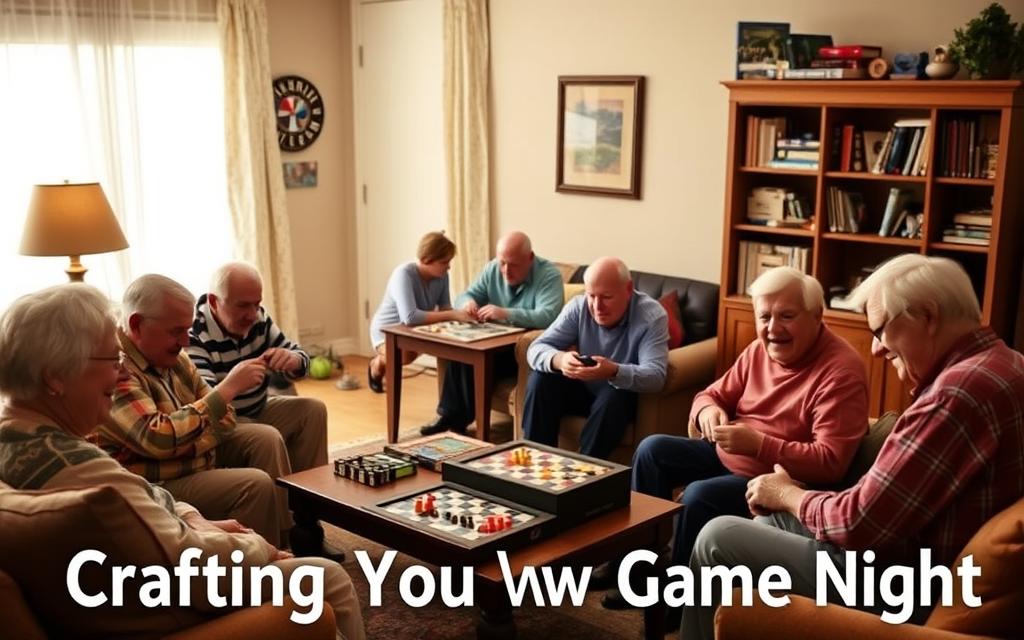
To host a successful session, organizers must focus on spatial ergonomics and sensory regulation. Implementing sit-down games for senior citizens requires an environment that minimizes physical strain while maximizing social visibility. By aligning the physical space with the participants’ needs, you create a “safe harbor” for cognitive exploration.
Ergonomic Spatial Configuration
Arrange furniture to facilitate effortless eye contact and auditory clarity. Utilize adjustable-height surfaces to accommodate various mobility aids, ensuring that every participant has a stable platform for their interaction. Environmental comfort is a prerequisite for engagement; maintaining ambient temperatures and high-contrast lighting reduces the “cognitive load” required just to navigate the room.
Selection Metrics for Optimal Engagement
When curating your library, prioritize sit-down games for senior citizens that offer “low-floor, high-ceiling” mechanics—meaning they are easy to start but offer deep strategic satisfaction. This balance ensures that both novices and seasoned veterans find value in the activity. If you need inspiration for broader activity categories, refer to our resource on adaptive senior hobbies.
Atmospheric Calibration and Psychological Safety
The right atmosphere reduces performance anxiety. Low-volume nostalgic music can stimulate long-term memory retrieval without interfering with the primary conversation. Keep the focus on “recreational success” rather than strict rule enforcement to preserve the inclusive spirit of the gathering.
Psychometric Assessment:
Tailoring the Experience to Group Dynamics
Understanding the specific desires of your cohort is essential for long-term participation. By assessing preferences, you can ensure that sit-down games for senior citizens align with the group’s collective “mastery level” and emotional goals. This individualized approach is a hallmark of high-level **geriatric wellness** planning.
Analyzing Game Modalities and Typology
Identify whether your group leans toward competitive strategy or collaborative storytelling. Some participants may find solace in the rhythmic nature of card games, while others seek the linguistic challenge of puzzle-based systems. Identifying these “interest silos” allows for more effective event planning.
Accounting for Skill Variance and Mastery
Avoid “participation friction” by gauging the current cognitive thresholds of the group. Sit-down games for senior citizens should be challenging enough to trigger neuroplasticity but accessible enough to prevent frustration. Offering multiple difficulty tiers within a single game night ensures that no one is left behind.
Adaptive Mechanics:
Customizing for Physiological Requirements
Inclusion is a technical challenge that requires intentional modification. When deploying sit-down games for senior citizens, organizers should proactively adapt rules and physical components to accommodate visual, auditory, or fine-motor sensitivities. This technical empathy ensures that “The Joy of Play” remains universal.
Rule Simplification and Cognitive Scaffolding
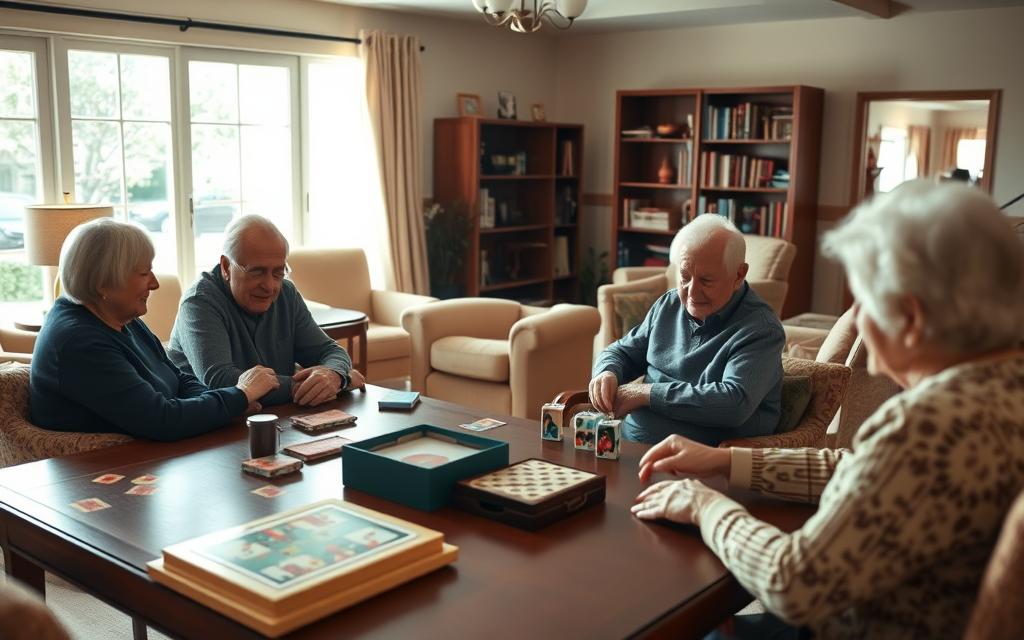
Modifying complex rules into “modular segments” allows seniors to focus on immediate tactics rather than long-term administrative overhead. Utilizing visual aids, larger typeface instructions, and tactile markers can significantly enhance the experience for those with sensory changes.
Evolutionary Variations for Diverse Abilities
Providing “seated variations” of traditionally active games allows participants with limited mobility to maintain their social rank within the group. For those seeking even more diverse engagement options, we recommend reviewing our guide on senior-specific engagement strategies. Using these tools, sit-down games for senior citizens become a platform for empowerment.
Digital Integration:
The Rise of Virtual Sedentary Play
The digital landscape offers an infinite library of sit-down games for senior citizens that can be accessed from the comfort of a tablet or smartphone. These interfaces provide built-in accessibility features—such as zoom functions and high-contrast modes—that physical games often lack.
Mobile Interfaces and Cognitive Training Apps
Applications focused on executive function training help maintain mental sharpness through gamified problem-solving. These digital sit-down games for senior citizens offer real-time feedback and progress tracking, which can be highly motivational for those tracking their cognitive health.
| Digital Modality | Targeted Wellness Benefit |
|---|---|
| Lumosity / Elevate | Attention, Memory, and Processing Speed |
| Digital Solitaire | Pattern Recognition and Stress Mitigation |
| Virtual Crosswords | Linguistic Retrieval and Vocabulary Retention |
Virtual Social Connectivity
Online platforms allow seniors to engage with geographically distant family members through multiplayer interfaces. This digital bridge ensures that even those in isolated environments can participate in the “communal joy” of group recreation, fostering geriatric social health in a high-tech era.
Logistical Execution:
How to Host a Sit-Down Game Night
Executing a successful social gathering requires meticulous planning and a focus on participant comfort. When you organize sit-down games for senior citizens, you are creating a structured environment for memory-making and emotional synchronization. A well-coordinated event reduces social friction and ensures that the focus remains on communal enjoyment.
Outreach and Personal Invitations
Commence your coordination by reaching out to your network through accessible digital channels or personalized telephonic communication. When extending an invitation, clearly define the schedule and the specific indoor modalities planned for the session. Providing a clear itinerary helps guests prepare mentally, ensuring they feel confident and eager to participate in the scheduled sit-down games for senior citizens.
Strategic Rotation and Energy Management
Implement a varied rotation of activities to accommodate differing attention spans and energy levels. Balancing intensive board-based challenges with lighter card sets keeps the momentum steady. To support sustained engagement, provide ergonomic snack stations with easily consumable refreshments and utilize ambient acoustic backgrounds to maintain a vibrant, positive mood throughout the facility.
Creative Modalities: Sit-Down Games
for Senior Citizens that Spark Imagination
Beyond cognitive drill-work, play serves as a vital outlet for self-expression. Utilizing sit-down games for senior citizens that incorporate creative elements allows for the externalization of internal narratives and artistic impulses. This creative engagement is a key pillar of geriatric psychological health, fostering a sense of accomplishment and identity.
Artistic Synthesis and Tactile Play
Incorporate games that bridge the gap between leisure and fine motor skill maintenance. Drawing-based challenges or collaborative crafting puzzles allow participants to utilize their “visuospatial intelligence” in a low-pressure setting. These sit-down games for senior citizens encourage the brain to find novel solutions, reinforcing the neural pathways associated with creative problem-solving.
Storytelling and Narrative Improv
Verbal storytelling and improvisational prompts are excellent for maintaining linguistic fluency and social wit. These modalities invite participants to share life experiences through a playful lens, strengthening communal bonds through shared laughter. For more ways to integrate creativity into daily life, consider our resource on creative aging hobbies.
Intellectual Scaffolding:
Incorporating Educational Elements
Lifelong learning is a primary defense against age-related cognitive decline. Integrating educational components into sit-down games for senior citizens transforms leisure time into a sophisticated neuro-rehabilitation session. This “stealth learning” approach keeps the mind sharp while satisfying the human drive for curiosity and growth.
Linguistic Mastery and Historical Trivia
Vocabulary-driven board games and history-based quiz challenges act as targeted memory retrieval exercises. By testing knowledge across diverse eras and topics, these sit-down games for senior citizens help maintain “crystallized intelligence”—the ability to use skills, knowledge, and experience effectively as we age.
Financial Literacy and Strategic Planning
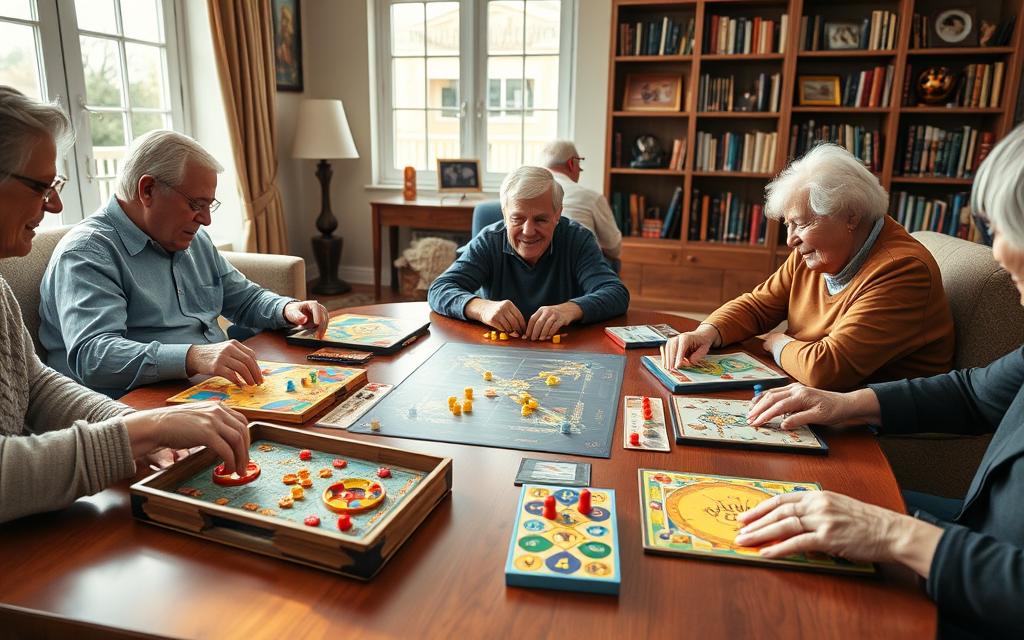
Modalities that simulate real-world economic scenarios, such as investment-based board games, provide essential cognitive exercise in financial logic and planning. These activities equip participants with the mental frameworks necessary for managing modern life complexities, all while enjoying the safety of a simulated tabletop environment.
The Continuous Optimization Loop:
Feedback and Game Night Reflections
The evolution of a successful social program relies on the “Continuous Optimization Loop.” After concluding a session of sit-down games for senior citizens, it is vital to assess the impact of each activity. This reflection ensures that future gatherings are more aligned with the specific psychological and social needs of the participants.
Assessing Impact and Social Resonance
Initiate a brief post-event discussion to identify which sit-down games for senior citizens generated the highest levels of engagement and laughter. Encouraging open dialogue allows guests to feel invested in the program’s success, turning them from passive participants into active “co-curators” of their own social wellness.
The Sit-Down Classic Appendix:
10 Additional Quick-Play Modalities
To ensure your wellness toolkit is fully stocked, we have curated ten additional low-impact activities. these require zero standing and minimal setup, making them perfect for maintaining social momentum.
Conclusion: Reclaiming Vitality Through Strategic Play
The integration of sit-down games for senior citizens into daily life is more than a recreational choice; it is a commitment to cognitive longevity and emotional resilience. By engaging in these structured activities, you are actively defying the stereotypes of aging and proving that the spirit of discovery has no expiration date.
Preserving the “Legacy of Laughter”
Every session of sit-down games for senior citizens serves as a platform for building new, vibrant memories with loved ones. These moments of shared victory and friendly competition become the stories that bind families together across generations.
The “Evergreen Mind” Philosophy
By challenging your patterns of thought, you are fostering neuroplasticity. Whether you are mastering a complex financial board game or a rapid-fire trivia set, you are keeping your executive functions sharp, focused, and ready for whatever comes next.
“We do not stop playing because we grow old; we grow old because we stop playing. Your next great adventure is only a tabletop away.”
Ready to Expand Your Horizon of Hobbies?
Sit-down games are just one facet of a vibrant, active lifestyle. Explore our definitive master resource to discover a world of creative, physical, and intellectual pursuits tailored for the modern senior.
Knowledge Hub: Expanding Your Wellness Journey
Internal Support Guides
Clinical & Research Sources
Frequently Asked Questions:
Sit-Down Games for Seniors Therapeutic
Play & Wellness
What are some popular sit-down games for senior citizens?
Classic board games like Scrabble, Chess, and Monopoly remain top-tier choices for strategy. For those preferring card-based challenges, Spades, Bridge, and Hearts offer high engagement, while linguistic puzzles like Boggle and crosswords provide excellent solo stimulation.
How can sit-down games benefit seniors’ cognitive function?
Engaging in consistent mental play helps fortify synaptic density and mental acuity. Strategy-heavy board games and memory-intensive puzzles act as a form of “cognitive gymnastics,” which research suggests can delay age-related memory loss and improve executive control.
Can sit-down games be adapted for seniors with different abilities?
Yes. Adaptive play is essential for inclusion. Rules can be streamlined to reduce cognitive load, and physical components can be replaced with large-print or high-contrast versions. Adjusting the difficulty level ensures that the activity remains rewarding regardless of mobility or sensory changes.
What are some digital sit-down games that seniors can enjoy?
Modern tablets offer a gateway to virtual board games and specialized brain-training apps. These digital interfaces often include social features like “chat” and “multiplayer,” allowing users to maintain social synchronization with family and friends from a comfortable, seated position.
How can I host a successful sit-down game night for seniors?
Focus on spatial ergonomics and a welcoming atmosphere. Ensure the lighting is high-contrast and seating is supportive. By selecting a diverse mix of games and providing easy-to-handle refreshments, you foster an environment where guests feel safe and motivated to interact.
What are some low-impact games that are suitable for seniors?
Standard card games and tabletop puzzles are ideal low-impact options. These activities prioritize fine motor skills and mental focus without requiring significant physical exertion, allowing for long periods of comfortable, sedentary engagement and enjoyment.
Can sit-down games for senior citizens help reduce stress and anxiety?
Absolutely. Immersive play triggers a “flow state” that lowers systemic cortisol levels. By providing a healthy social distraction and a sense of tangible achievement, games help mitigate feelings of isolation and improve overall emotional regulation and mood.
How can I incorporate educational elements into sit-down games for senior citizens?
Look for “stealth learning” opportunities in trivia, history-based quizzes, or games involving financial literacy. These modalities keep the mind active while satisfying curiosity, effectively merging recreational play with the biological benefits of lifelong learning.

About the Author: Barbara J. Dowling
With over 40 years of dedicated experience working one-on-one with senior citizens, Barbara J. Dowling is a leading voice in geriatric wellness, retirement planning, and government assistance.
As the founder and primary contributor to Seniors Life Hub, Barbara leverages her decades of firsthand insight to provide seniors and their families with practical, evidence-based guidance. Her mission is to ensure every individual navigates their golden years with the health, purpose, and joy they deserve. Enjoyable sit-down games for seniors play a part in this.