Medicare Pays for Free Lift Chair for Seniors
Do you or a loved one have trouble moving around? A lift chair can really help. It gives the support and comfort you need every day. You might get a free lift chair for seniors from Medicare’s durable medical equipment (DME) coverage. But, what does this coverage mean, and how do you get it?
As you get older, getting up from sitting can be hard. That’s where a lift chair comes in. It’s not just a chair; it’s a mobility aid that can make your life better. Medicare knows how important these devices are and covers them under certain rules. Knowing these rules is key to making good choices for your health and moving around.
So, do you qualify for a free lift chair for seniors? The answer is in Medicare’s recliner coverage rules for 2025. Let’s look at how you can use this coverage and what you need to do to get a lift chair.
Key Takeaways
- Medicare covers lift chairs as durable medical equipment (DME) under certain conditions.
- You must meet specific requirements to qualify for coverage.
- Understanding the Medicare recliner coverage guidelines is key for approval.
- A lift chair can greatly improve mobility and life quality for seniors.
- It’s important to talk to a healthcare professional to see if you need a lift chair.
Understanding Mobility Solutions: The Power of Lift Recliners
Lift recliners are more than comfy chairs. They are key aids for people with mobility issues. These chairs help users move from sitting to standing safely and easily.
What Makes Lift Chairs Essential Mobility Aids
Lift chairs have motorized lifting mechanisms. They help users stand up or sit down gently. This is great for seniors or those with disabilities who find it hard to move.
These chairs are important because they help people be independent. Users can use them on their own. This keeps their dignity and confidence up.
How Motorized Lifting Mechanisms Transform Lives
The motorized lifting mechanism is a big deal in lift recliners. It lets users change the chair’s height with a button. This is a big help for those who can’t move much.
This feature makes it safer to get up or sit down. It keeps users safe and makes them feel more secure.
The Connection Between Independence and Quality of Life
Independence is key to a good life. When people can do things on their own, they feel more confident. Lift recliners help users move around safely.
Being independent lets seniors and those with mobility issues keep doing things they love. This makes their life better and improves their mood.
Medicare Coverage for Lift Chairs in 2025: Important Updates
As we get closer to 2025, it’s key to know about Medicare’s updates for lift chairs. Medicare helps by covering some costs for durable medical equipment, like lift chairs.
Medicare Part B and Durable Medical Equipment Policies
Medicare Part B helps pay for durable medical equipment (DME), which includes lift chairs. The chair must be needed for health reasons, as said by a doctor. Medicare Part B covers the lifting part, not the whole chair, because it’s DME.
There are rules to follow for coverage. For example, the supplier must be in Medicare and agree to accept Medicare payments. Knowing these rules helps people use the system right.
New Coverage Guidelines for the 2025 Benefit Year
The 2025 year has new rules for Medicare lift chair coverage. The main idea of covering the lifting part stays the same. But, what’s seen as medically necessary might change, or who can supply it might too. It’s important for people to keep up with these changes.
People should talk to their doctors and Medicare-approved suppliers. This way, they can understand how these updates affect their coverage.
Understanding What Portion Medicare Will Pay For
Medicare usually pays 80% of the approved cost for DME, like lift chairs. The person gets the bill for the other 20% and any deductibles. Knowing these costs helps with planning and budgeting.
Also, Medicare might have rules about what kind of lift chair and features are covered. People should work with their suppliers and doctors. This helps get the right equipment and keeps costs down.
How to Get a Free Lift Chair for Seniors Through Medicare
Getting a free lift chair through Medicare can seem hard. But, with the right help, it’s doable. First, you need to know how to get a lift chair through Medicare.
Medical Necessity Requirements and Documentation
To get Medicare to cover a lift chair, you need a doctor’s note. This note must say you really need the chair. Your doctor will check if the chair is good for your health and moving around.
Key documents you’ll need are:
- A doctor’s note saying you need a lift chair
- Medical records showing you have trouble moving
- Test results or diagnoses that support your need for a chair
Finding Suppliers That Accept Medicare Assignment
With your documents ready, find suppliers who take Medicare. This means they agree to take the Medicare-approved price as full payment. This can save you money.
To find these suppliers, you can:
- Check the Medicare website for DME suppliers near you
- Call local medical equipment suppliers to see if they take Medicare
| Supplier Criteria | Medicare Requirements | Benefits |
|---|---|---|
| Accepts Medicare Assignment | Must be enrolled in Medicare | Reduces out-of-pocket costs |
| Provides Necessary Documentation | Must supply detailed invoices and records | Ensures smooth claims processing |
| Offers Quality Equipment | Must meet Medicare’s quality standards | Ensures safety and effectiveness |
The Approval Process Timeline and What to Expect
After you send in your documents and pick a supplier, the approval starts. Medicare will check your claim to see if you qualify.
The typical timeline is:
- First review: 1-2 weeks
- Need more info? 1-3 weeks
- Final decision: 1-2 weeks after all info is in
Knowing these steps and getting your documents ready can make things go faster. This way, you can get the lift chair you need sooner.
Medical Conditions That Qualify You for Lift Chair Coverage
Medicare helps seniors with certain health issues get lift chairs. These issues affect how well you can move and live on your own. Knowing about these conditions is key to getting a lift chair.
Arthritis and Joint Mobility Issues
Severe arthritis in your hip or knee makes moving hard. It makes simple tasks hard. Medicare might cover lift chairs for those with severe cases.
Key considerations for arthritis coverage:
- Severity of arthritis: Medicare looks for severe arthritis that really limits how you move.
- Impact on daily activities: Your arthritis must make it hard to do daily tasks, like getting up from sitting.
Neuromuscular Diseases and ALS
Neuromuscular diseases, like ALS, weaken your muscles. This makes it hard to stand or walk. Lift chairs help keep you independent.
ALS patients face special challenges. Their muscle weakness gets worse, making lift chairs essential for daily life.
Hip or Knee Replacement Recovery
Recovering from hip or knee surgery is tough, mainly getting up from sitting. A lift chair helps during this time.
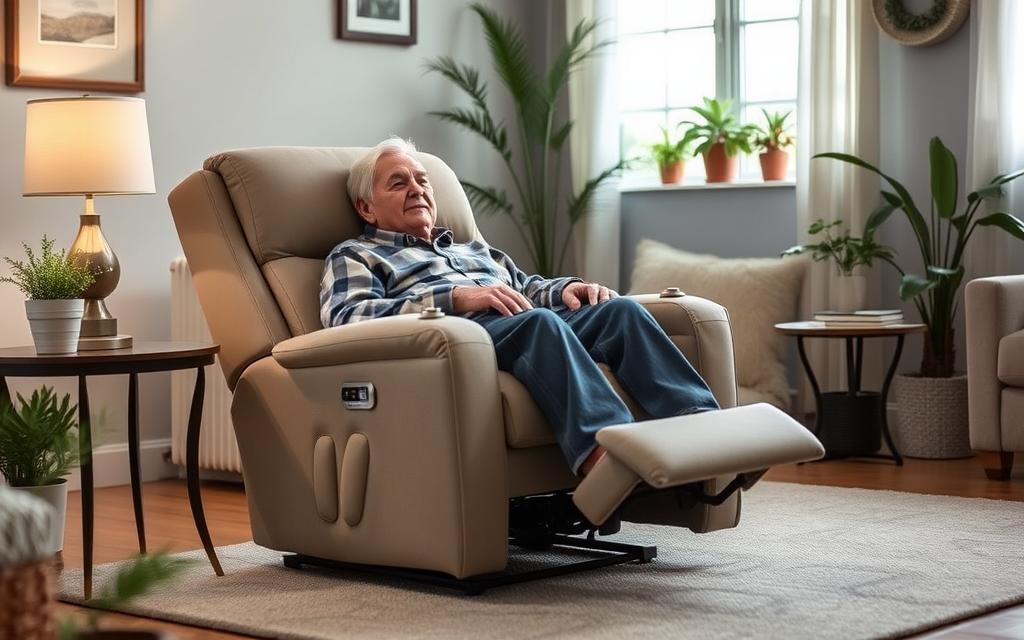
To get a lift chair covered, your doctor must write about your health issue and how it affects your movement. Here’s a table with the main health issues and what you need:
| Medical Condition | Key Requirements | Documentation Needed |
|---|---|---|
| Severe Arthritis | Significant mobility impairment | Medical records, doctor’s note |
| Neuromuscular Diseases (including ALS) | Muscle weakness affecting mobility | Diagnosis documentation, treatment plan |
| Hip or Knee Replacement | Post-surgical mobility issues | Surgery records, recovery plan |
Knowing about these health issues and what’s needed can help you get a lift chair covered by Medicare. Always talk to your doctor to make sure you qualify.
Medicaid and State Assistance for Power Lift Recliners
Seniors needing power lift recliners can look into Medicaid and state help. Medicare is key, but Medicaid and state programs can also help. They make it easier to get these important aids.
Supplementing Medicare Coverage with Medicaid
Medicaid can help if you’re eligible. It can lower what you pay for power lift recliners. Medicaid helps with costs Medicare doesn’t cover.
It can pay for copays and deductibles. Some states also offer extra benefits. These can include more mobility aids or services.
State-by-State Benefits Comparison
Medicaid and state help vary by state. Knowing what your state offers is important. It helps you use the system better.
Some states cover more, like power lift recliners. Others cover less. Find out what your state offers to understand your options.
Dual Eligibility Advantages for Seniors
Seniors with both Medicare and Medicaid get more help. This can include more coverage for power lift recliners. It can also reduce financial worries.
Dual-eligible seniors get more services. These can help keep them independent and happy. Knowing and using these benefits can greatly improve their lives.
Free Lift Chair for Seniors: Alternative Programs and Resources
If you’re a senior looking for a lift chair, there are many places to get help. Medicare is a big help, but other groups and government programs can also assist. They help those who need it most.
Veterans Affairs Benefits for Mobility Equipment
If you’re a veteran, the VA can help with mobility equipment like lift chairs. The VA supports veterans with disabilities. They offer money for mobility aids.
To get help, you must apply to the VA. You’ll need to show your service history and medical needs.
Veterans can greatly benefit from these programs. They offer many mobility solutions. It’s important to check these benefits out.
Non-Profit Organizations and Donation Programs
Many non-profits help seniors with mobility aids, like lift chairs. Groups like Disabled Veterans of America and Help Hope Live have donation programs. They need donations and community help to keep going.

To get help, seniors or their caregivers should contact these groups. Have your medical papers ready when you apply.
Local Community Support Networks
Local areas often have groups that help with mobility aids. These can be charities, community centers, or religious groups. They might have donation programs or know of other resources.
Talking to your local community can help find a lift chair. People in your area often help those in need. This can be a big help for seniors.
Looking into these programs can help seniors stay independent and happy.
Choosing the Perfect Electric Lift Chair for Your Needs
Finding the right electric lift chair is important. You need to think about comfort and how it helps you move. It’s key to know what you need before you choose.
Assessing Your Specific Mobility Requirements
First, figure out what you need from a lift chair. Do you need help getting up or a chair that can recline fully?
Mobility assessment is very important. Think about how well you can stand, sit, and move. This helps you pick the right chair.
Size, Weight Capacity, and Room Considerations
Size and weight capacity are key when picking a chair. Make sure it can hold your weight and fits in your room.
Measure where you’ll put the chair. Think about its size when it’s up and down. Proper fit is key for comfort and safety.
Premium Features That Enhance Comfort and Safety
Today’s lift chairs have cool features. They might have heat, massage, adjustable arms, and more.
Think about what you want most. For example, if you hurt your back, look for a chair with lumbar support or massage.
Top Medicare-Approved Brands and Models
Many brands make Medicare-approved lift chairs. Golden Technologies, La-Z-Boy, and Medline are some top ones. Look at warranty, customer service, and repair options.
Also, check out specific models known for being durable and comfy. Reading reviews and talking to health experts can help a lot.
Navigating the Application Process: Step-by-Step Guide
Getting a Medicare-covered lift chair can seem hard. But, with the right help, you can get the aid you need. The process has many steps that you must follow carefully.
Initial Consultation with Your Healthcare Provider
The first step is to talk to your healthcare provider first. You will share your mobility problems and what you use now. It’s important to tell them all about your needs.
Your doctor will check your health and decide if you need a lift chair. This is a key part of your Medicare application.
Securing a Doctor’s Prescription for Your Lift Chair
Next, you need to get a doctor’s prescription for your lift chair. Your doctor will write down why you need it. This is a very important part of your application.
Make sure the prescription has all the details. This includes your diagnosis and how the lift chair will help you.
Submitting Your Medicare Application Correctly
With your prescription, you can now submit your Medicare application. You should work with a supplier who knows how to do this. They will help you and make sure everything is right.
Your application needs your prescription, medical records, and other documents. Check that everything is correct and complete. This will help avoid delays.
Following Up on Your Claim Status
After you apply, you should follow up on your claim status often. You can call Medicare or your supplier to ask about it. Be ready to give more information if they ask.
Staying on top of your claim status is important. It helps you know what’s happening and can fix any problems quickly. Don’t give up and keep following up.
Overcoming Common Obstacles in Getting Approved
Getting Medicare approval for a lift chair can be hard. Knowing the common problems helps. Seniors often face issues that slow down their claims.
Addressing Incomplete Medical Documentation
One big reason for Medicare denials is missing medical info. It’s key to work with your doctor. Make sure all important medical details are documented well.
Key documentation includes:
| Document Type | Description | Importance |
|---|---|---|
| Medical History | Detailed record of your medical conditions and treatments | High |
| Physician’s Notes | Notes from your doctor explaining your need for a lift chair | High |
| Functional Assessment | Evaluation of your ability to perform daily activities | Medium |
Appealing a Medicare Denial Successfully
If Medicare says no, don’t give up. You can appeal. First, find out why they said no. This info is usually in the denial letter.
To appeal successfully, you’ll need to:
- Gather more supporting documents
- Write a clear appeal letter
- Go to a hearing if needed
Working with Your Doctor to Strengthen Your Case
Your doctor is very important for your claim. Working with them makes your application stronger.
Tips for working with your doctor:
- Talk about your mobility problems and needs
- Make sure your doctor knows what Medicare wants
- Ask for a detailed letter saying why you need a lift chair
By tackling common problems early and teaming up with your doctor, you can boost your chances of getting Medicare approval for a lift chair.
Maintaining Your Medicare-Covered Lift Recliner
Keeping your Medicare-covered lift recliner in good shape is key. It lasts longer and keeps you comfortable. A well-maintained chair also keeps you safe and independent.
Routine Care Tips to Extend Lifespan
To keep your lift recliner in top shape, follow these easy tips:
- Regularly dust and vacuum the chair, focusing on tight spots and fabric.
- Check and tighten any loose screws or bolts.
- Lubricate moving parts as the maker suggests.
- Avoid direct sunlight and heating vents.
- Use a fabric protector if your chair has fabric.
Proper care can make your lift recliner last longer. These simple steps help your chair support you well.
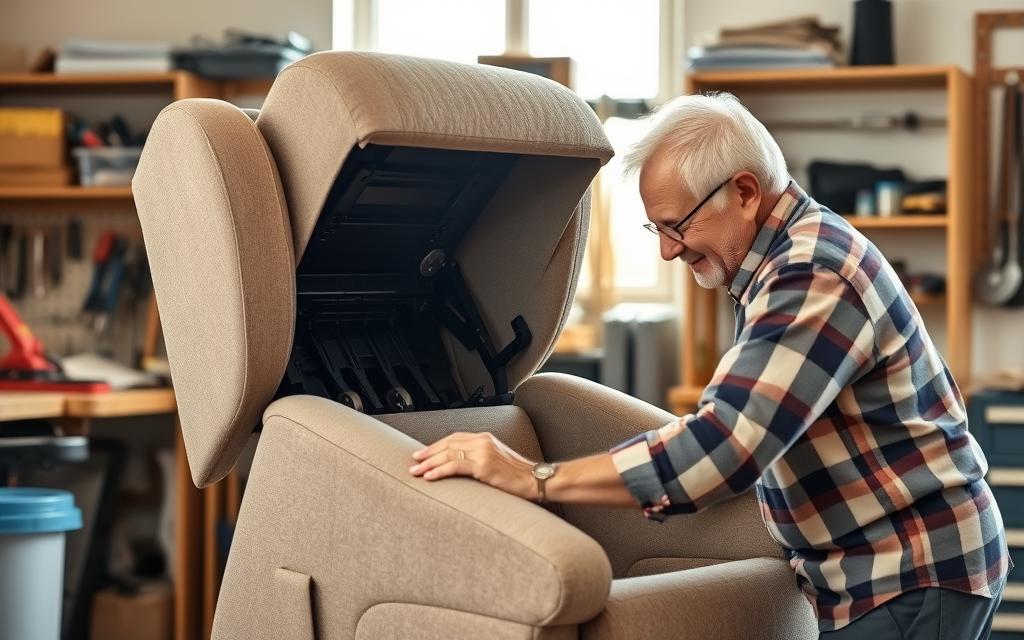
When and How to Request Covered Repairs
If your lift recliner needs fixing, know when Medicare might help. Medicare often covers repairs for Durable Medical Equipment (DME) like lift chairs if they’re needed for health reasons.
To ask for covered repairs:
- Call your supplier or healthcare provider to report the problem.
- Give them proof of the issue and any past care.
- Follow their steps to fix the chair.
Keep all repair records for later use.
Qualifying for Replacement Parts or a New Chair
Medicare might also cover new parts or a whole new chair. This happens when fixing the chair is too expensive or not possible.
| Condition | Medicare Coverage | Action Required |
|---|---|---|
| Chair is beyond repair | May cover a new chair | Consult with your healthcare provider and supplier |
| Specific parts are faulty | May cover replacement parts | Contact your supplier for assessment and replacement |
| Chair is no longer medically necessary | No coverage for replacement | Discuss alternatives with your healthcare provider |
Knowing about maintenance and repair options helps you get the most from your Medicare-covered lift recliner.
How Caregivers Can Support the Acquisition Process
You are very important in helping your loved one get a lift chair. Your help can make a big difference. It helps them stay independent and live well.
Gathering Essential Medical Information
Getting the right medical info is key. You can help by collecting your loved one’s medical records. This includes their diagnoses, treatment plans, and test results.
This info shows why they need a lift chair. It’s important for Medicare or other healthcare providers.
Make sure you have a list of their medicines, doctors, and allergies. This helps with the application and picking the right chair.
Communicating Effectively with Healthcare Providers
Talking well with doctors is very important. You can help by going to appointments and taking notes. This makes sure all info is shared with the healthcare team.
Ask the right questions to make sure their needs are met. This includes talking about lift chairs and getting a doctor’s prescription for Medicare.
Advocating for Your Loved One’s Mobility Needs
Being an advocate means more than just helping with the chair. It’s about making sure they get the best care. This means knowing their mobility challenges and what they prefer.
Your support is key to making sure they get a chair that improves their comfort and safety. Your help makes this process easier and more successful.
In summary, your role in helping your loved one get a lift chair is very important. By getting medical info, talking to doctors, and advocating for their needs, you greatly improve their life.
Conclusion: Enhancing Senior Independence Through Accessible Mobility Solutions
Accessible mobility solutions are key for seniors to stay independent. They help keep seniors’ quality of life high. This is thanks to the right support and resources.
Lift chairs are more than furniture. They help seniors move around safely at home. This reduces falls and injuries. Knowing about Medicare and other programs helps you regain control.
These mobility solutions make life more active and fun. They help whether you’re recovering or managing a condition. Start exploring today to live your best life.
Resources:
Medicare.Gov – Medicare Coverage for Lift Chairs
Free Stuff for Senior Citizens from the Government
Free Walk-In Showers for Seniors