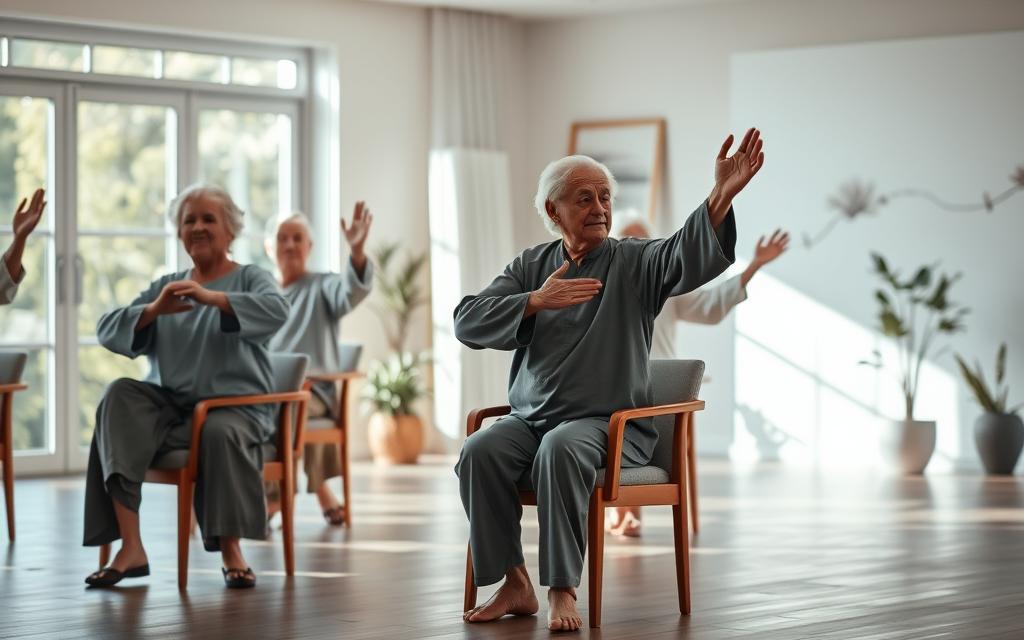
Chair Tai Chi for Seniors: Seated Tai Chi Workouts
As you get older, keeping your body flexible and balanced is key. Chair Tai Chi for Seniors is a soft, seated workout. It makes Tai Chi easy to do while sitting down.
Are you new to Tai Chi or have trouble moving? Does seated Tai Chi really help? Yes, it does. It makes you more flexible, balanced, and relaxed. And you can do it all from a chair at home.
Exploring Chair Tai Chi for Seniors opens up a world of benefits. It’s a simple yet powerful way to improve your health. Adding seated Tai Chi to your day can make you healthier and more balanced.
Key Takeaways
- Chair Tai Chi for Seniors improves flexibility and balance.
- Seated Tai Chi is a low-impact, gentle exercise suitable for older adults.
- Tai Chi can be adapted to be performed while seated, making it accessible for those with mobility issues.
- Regular practice of Chair Tai Chi can enhance overall well-being and relaxation.
- Seated Tai Chi is an effective way to improve health without exerting too much.
The Transformative Benefits of Chair Tai Chi for Seniors
Chair tai chi is changing how seniors think about health and wellness. It’s a safe and easy way to exercise. It’s great for older adults who might have trouble moving or worry about falling.
Seated tai chi keeps the good parts of traditional tai chi. It helps with balance and flexibility. But it’s safer because you don’t have to worry about falling.
How Seated Tai Chi Differs from Traditional Martial Arts Forms
Seated tai chi is done while sitting in a chair. This makes it easier for seniors who have trouble standing or balancing. This change doesn’t make the practice less effective. It’s all about slow, flowing movements that help you relax and find peace.
By sitting, seniors can better focus on their breathing and movement. This makes their tai chi experience even better. Seated tai chi is more welcoming because you don’t have to stand or move around.
Who Can Experience the Healing Power of Chair Tai Chi
Chair tai chi is for seniors of all abilities. It’s perfect if you’re getting better from an illness, managing a long-term condition, or just want to feel better. Adding chair tai chi to your routine can be very helpful.
By doing chair tai chi every day, you can feel its healing effects. You’ll see less stress, better balance, and more flexibility.
Remarkable Health Benefits That Seated Tai Chi Offers
Seniors can get many health benefits from seated tai chi. It’s not just exercise. It’s a way to take care of your body, mind, and heart.
Physical Improvements: Enhanced Balance and Flexibility
Seated tai chi makes you more balanced and flexible. It makes moving around easier. It also lowers the chance of falling.
The slow movements stretch and strengthen muscles. This is great for seniors. It helps them move better and avoid injuries.
Mental Wellness: Boosting Cognition and Reducing Stress
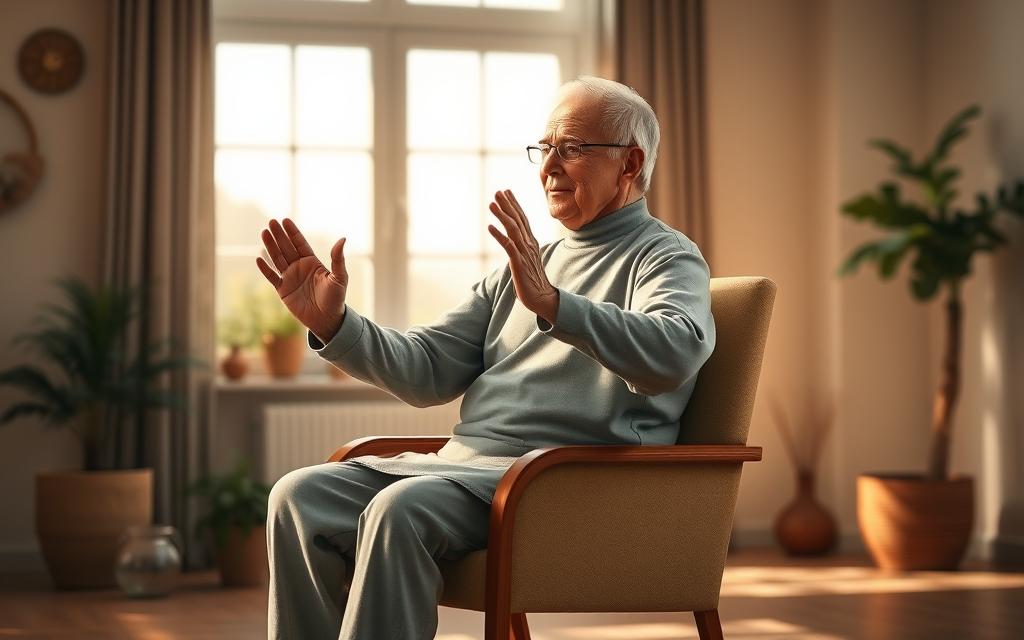
Seated tai chi is good for your mind too. It lowers stress and boosts thinking skills. It helps calm anxiety and depression.
Studies show it can slow down brain aging. It keeps your mind sharp by focusing and remembering.
Circulation and Energy Flow Improvements
Seated tai chi also boosts blood flow and energy. It helps your body work better. This means healthier skin and organs, and faster healing.
| Health Benefit | Description | Impact on Seniors |
|---|---|---|
| Improved Balance | Reduces risk of falls through better coordination | Enhanced safety and independence |
| Increased Flexibility | Gently stretches and strengthens muscles | Better mobility and reduced stiffness |
| Reduced Stress | Promotes relaxation and calmness | Improved mental well-being |
| Improved Circulation | Enhances blood flow and energy | Better overall health and healing |
Getting Started: Preparing Your Chair Tai Chi Journey
Your chair tai chi journey starts with a good practice area and the right seated posture. It’s important to make a space that helps you relax and focus.
Creating the Perfect Practice Space
First, find a quiet and comfy spot in your home for practice. Make sure the room is just right in temperature. Use a mat or carpet to mark your space. A clean space helps you relax and focus better.
Proper Seated Posture: Feet Flat on the Floor
Good seated posture is key for chair tai chi. Sit right with your feet on the floor, back straight, and shoulders relaxed. This helps you balance and flow energy better.
| Posture Element | Correct Alignment |
|---|---|
| Feet | Flat on the floor, parallel to each other |
| Back | Straight, maintaining the natural curve of the spine |
| Shoulders | Relaxed, avoiding tension |
Setting Achievable Goals for Consistent Progress
Setting goals is important to stay motivated and track your progress. Start with small, easy goals, like practicing for a few minutes daily. Then, slowly add more time as you get better.
By following these tips, you can make a rewarding chair tai chi practice. It will improve your body and mind. Remember, being consistent is the secret to enjoying all the benefits of chair tai chi.
Essential Chair Tai Chi Movements for Improved Flexibility
Seniors can get more flexible with chair tai chi. It has gentle, coordinated movements. These exercises are easy and help keep you healthy.
Gentle Warm-Up Exercises for Seniors
Start with simple warm-ups to get ready for more. Seated leg lifts and shoulder rolls boost flexibility and blood flow.
To do seated leg lifts, sit with feet on the floor. Lift one leg straight up, then lower it. Do the same with the other leg. This makes your hips and knees feel better.
Upper Body Movements to Stretch and Strengthen
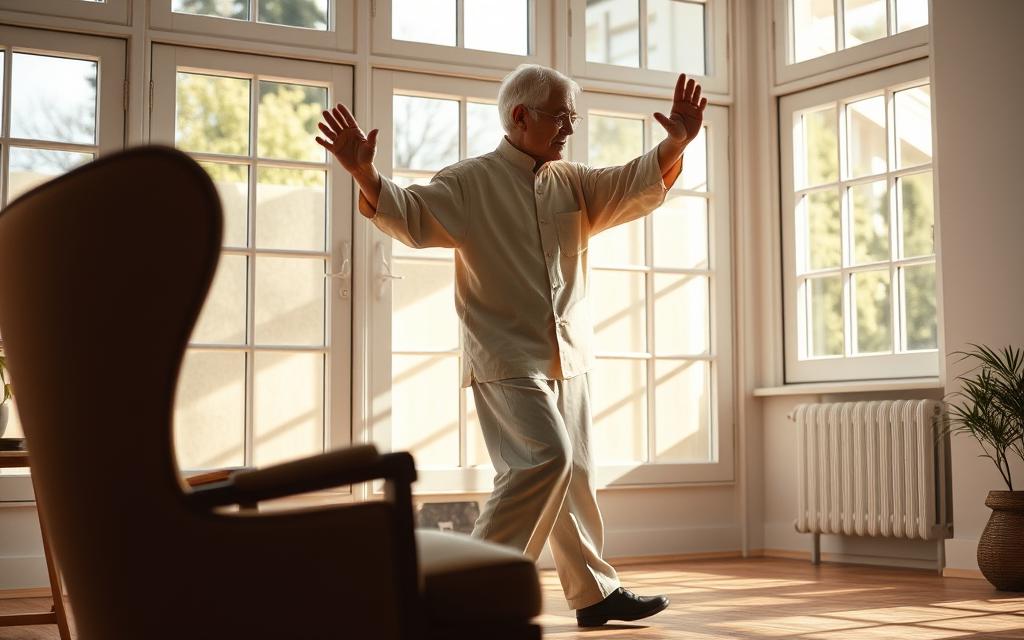
Chair tai chi upper body moves stretch and strengthen. Arm raises and shoulder rotations help your posture and loosen stiffness.
| Exercise | Benefit | How to Perform |
|---|---|---|
| Arm Raises | Improves shoulder flexibility | Raise your arms to shoulder height, then lower them. |
| Shoulder Rotations | Reduces shoulder tension | Rotate your shoulders in a circular motion, first forward then backward. |
Lower Body Exercises for Better Circulation
Lower body exercises boost circulation and keep joints healthy. Ankle rotations and seated marching are great for sitting.
Ankle rotations move your ankles in circles. This improves blood flow and eases ankle stiffness.
Adding these chair tai chi moves to your day can greatly improve flexibility, balance, and health.
Chair Tai Chi for Seniors: Sequences to Enhance Balance
Chair tai chi helps you balance better. This can lower the chance of falls and injuries. It also makes you feel better overall.
Chair tai chi has slow, flowing moves. These moves strengthen your core and improve coordination. They help you balance better, making daily life easier.
Coordinated Movement Patterns for Stability
Coordinated moves are key for better balance. In chair tai chi, you move arms and legs together. For example, lifting one arm helps balance by shifting your weight.
To try this, sit with feet flat. Lift one arm and shift your weight to the other side. Do the same on the other side, moving smoothly.
| Movement | Description | Benefit |
|---|---|---|
| Arm Raise | Raise one arm while shifting weight to the opposite side | Improves balance and coordination |
| Leg Lift | Lift one leg slightly while maintaining posture | Strengthens leg muscles and enhances stability |
| Torso Twist | Gently twist your torso while seated | Improves flexibility and balance |
Yang Style Adaptations for Seated Practice
The Yang style of tai chi is slow and flowing. It’s great for seated practice. This way, you can enjoy tai chi safely from a chair.
Start with “Grasping the Sparrow’s Tail.” It’s a series of arm movements. These help improve coordination and balance.
Three Simple Movements to Practice Daily
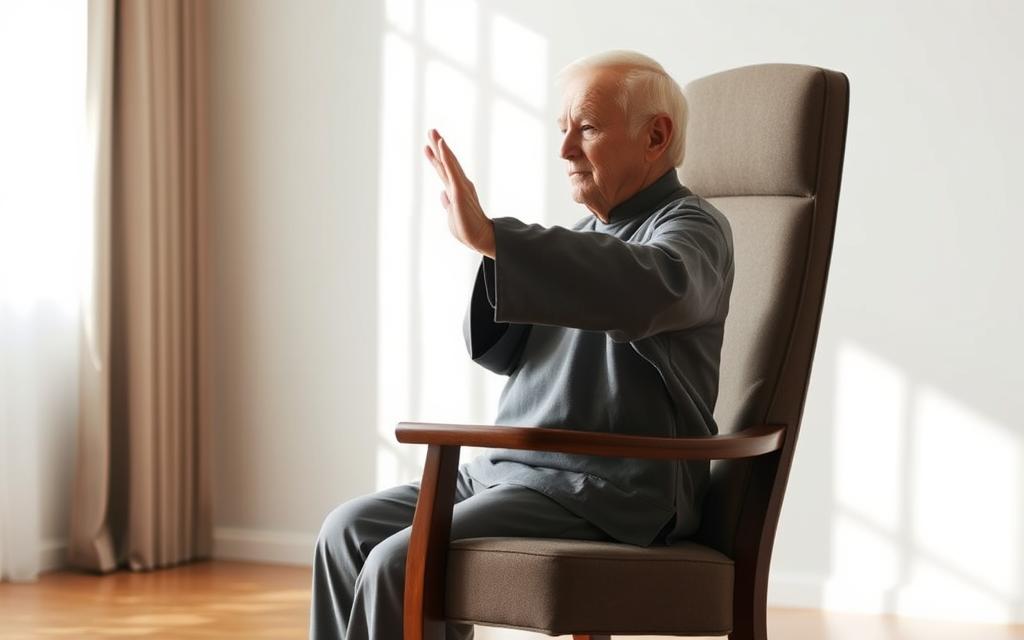
Practicing daily is key for better balance. Here are three simple moves:
1. Seated Marching: Lift legs slightly as if marching. This boosts circulation and balance.
2. Arm Circles: Make small circles with your arms. First, go clockwise, then counterclockwise. This improves coordination.
3. Side Stretch: Stretch to one side, holding your arm straight. Then, stretch to the other side. This increases flexibility.
Doing these moves daily can greatly improve your balance and health.
Tailored Chair Tai Chi for Chronic Conditions
Chair tai chi is a special exercise for people with chronic health issues. It’s great because it can be changed to fit different health needs. This way, everyone can join in and feel the benefits.
Modifications for Arthritis and Joint Pain
For those with arthritis and joint pain, chair tai chi is a soft way to move joints and ease pain. Sitting down means you can do low-impact moves. This helps avoid putting too much stress on your joints.
Adapted Exercises for Limited Mobility
Chair tai chi is also good for people with limited mobility. You can change the exercises to fit how far you can move. This makes it easy to start moving again, even if you’re recovering or have mobility problems.
Tai Chi Can Help: Approaches for Cognitive Challenges
Even those with dementia or Alzheimer’s can benefit from chair tai chi. The slow, calm movements and focus on breathing can help the mind. It’s also a great activity for caregivers to do with their loved ones.
Adding chair tai chi to your life can make you feel better physically and mentally. It’s a gentle way to improve your health, no matter your chronic condition.
Incorporating Seated Tai Chi Into Your Daily Life
You can make tai chi a part of your daily life. This can make you feel better, give you more energy, and help you relax.
Morning Routines to Energize Your Day
Starting your day with tai chi can wake you up. It gets your blood flowing and makes you ready for the day.
Simple Morning Routine: Start with neck stretches. Then do arm movements. End with deep breaths.
Midday Practices for Stress Relief
Tai chi is great for stress in the middle of the day. A few minutes of tai chi can help you focus and calm down.
Try this quick midday sequence: Sit with your feet on the floor. Do gentle twists. End with calm breaths.
Evening Tai Chi for Better Sleep
Evening tai chi tells your body it’s time to sleep. It relaxes you and gets you ready for a good night’s sleep.
Evening Routine: Start with slow movements. Then do deep breathing. Finish with meditation.
| Time of Day | Tai Chi Benefits | Sample Routine |
|---|---|---|
| Morning | Increased energy, improved circulation | Neck stretches, arm movements, deep breathing |
| Midday | Stress relief, improved focus | Torso twists, calming breaths |
| Evening | Relaxation, better sleep | Slow movements, deep breathing, meditation |
Resources to Deepen Your Seated Tai Chi Practice
Keep going on your Tai Chi journey by finding new ways to practice. Start with the right resources. As you get better, good guidance and tools will make your practice better.
Finding Quality Chair Tai Chi Classes Near You
Local classes let you learn from experts and meet others who like Tai Chi. Look for classes in:
- Community centers
- Senior centers
- Tai Chi schools
- Local wellness studios
Search online for “chair Tai Chi classes near me.” Or check Senior Tai Chi or Local Tai Chi Classes websites for listings.
Recommended DVDs and Free Videos Online
Practice at home with DVDs and online videos. Here are some good ones:
| Resource | Description | Level |
|---|---|---|
| Tai Chi for Seniors DVD | A guide to seated Tai Chi by an expert. | Beginner |
| Free Tai Chi Videos Online | Free videos on YouTube for all levels. | All levels |
| Chair Tai Chi: A Step-by-Step Guide | A DVD for beginners to learn chair Tai Chi. | Beginner |
Supportive Props to Enhance Your Exercise Option for Seniors
Right props can make your Tai Chi better. They offer support and comfort. Good props include:
- Chair with a sturdy back
- Non-slip floor mat
- Resistance bands
- Comfortable, loose clothing
These props help you stay in the right position. This makes your practice safe and effective.
Conclusion: Embracing the Lifelong Journey of Chair Tai Chi
Starting your chair tai chi journey means more than just a new exercise. It’s a lifelong path to better health and happiness. Chair tai chi can change your life, making it better in many ways.
Chair tai chi helps you balance, move better, and feel less stressed. It also makes your mind clearer. As you keep practicing, you’ll find more joy and calm in your life.
So, why not start today? Chair tai chi is easy to do, even if you’re not very mobile. It’s a way to feel better, no matter how old you are. Begin your chair tai chi journey and find happiness and health.
Resources:
Tai Chi for Seniors: Unlock the Key to Vibrant Living
Senior Chair Exercises for Seniors: Best 10 Seated Chair Workouts


