Simple Bed Exercises for Elderly: Improve Mobility and Mood
As you get older, it’s key to keep moving and stay independent. Bed exercises for elderly people can really help. Are you or someone you love having trouble moving around? Wondering if you can get better without leaving your bed?
Doing simple, gentle moves can really help. These exercises can stop pressure sores, make life better, and even lift your mood. But, what are the best exercises, and how can you do them every day?
Looking into gentle bed exercises opens up many benefits for your health. So, are you ready to start moving better and being more independent with bed exercises for elderly?
Key Takeaways
- Improve mobility and independence with simple bed exercises
- Prevent pressure sores and enhance overall quality of life
- Boost your mood with gentle movements
- Discover effective exercises for daily routine
- Regain mobility and independence with bed exercises for elderly
The Life-Changing Impact of Bed Mobility for Seniors
For seniors, moving freely, even from bed, changes their health and freedom. Bed exercises boost circulation and prevent sores. They also make life better. These exercises are easy, safe, and work well for those who can’t move much.
Why Movement Matters Even When You’re Lying Down
Moving, even lying down, keeps you healthy. Bed exercises prevent problems from not moving. They also make muscles stronger, more flexible, and improve well-being. This is key for seniors to stay independent and avoid falls.
How 10 Minutes of Daily Bed Activity Transforms Senior Health
Just 10 minutes a day of bed exercises can change senior health. It improves blood flow, reduces stiffness, and strengthens muscles. Regular movement also stops sores, improves joint movement, and boosts health. Seniors can live better and stay independent longer by doing these exercises daily.
It’s important to start bed exercises slowly and safely. Seniors should begin with easy moves and get harder as they get better. Always talk to a doctor before starting new exercises to make sure they’re right for you.
2025’s Revolutionary Approach to Bed Exercises for Elderly
In 2025, bed exercises for the elderly are changing a lot. New studies and methods are making it easier for seniors to stay active. They can keep their strength and move around better from their beds.
New Research Transforming Senior Bed Fitness
New studies show bed exercises are very important for seniors. They help with blood flow, prevent falls, and make seniors feel better. For example, a study in the Journal of Aging Research found a 25% better balance and coordination in seniors who exercised in bed every day for six months.
Here are some important findings from recent studies on bed exercises for seniors:
| Study | Key Findings | Benefits |
|---|---|---|
| Journal of Aging Research | 25% improvement in balance and coordination | Reduced risk of falls |
| Journal of Gerontology | Improved circulation and reduced stiffness | Enhanced mobility and flexibility |
| Journal of Rehabilitation | Increased muscle strength and endurance | Better overall health and independence |
How Modern Techniques Maximize Results with Minimal Effort
Modern bed exercises for seniors aim to get great results with little effort. They use gentle, low-impact movements that fit each person’s needs. This way, seniors can get stronger and move better without getting too tired.
For instance, leg lifts, arm raises, and gentle stretches can be done in bed. This makes it easy for seniors to exercise every day. These exercises help their health and make them feel good about themselves.
Before You Begin: Setting Yourself Up for Success
Starting bed exercises right means setting up a good space. This step helps you focus on your elderly exercise routine safely.
Creating Your Safe and Supportive Exercise Environment
To make a safe area for low-impact bed exercises, clear your bed area. Make sure your bed is easy to get in and out of. Use a bed rail or chair for support.
Keep a phone or device nearby for emergencies. These steps help you stay safe and get the most from your gentle exercises for elderly.
Recognizing Your Limits While Challenging Your Abilities
Knowing your limits is key when starting bed exercises for older adults. Talk to your doctor about any concerns.
Listen to your body during exercises. Stop if you feel pain or discomfort. Start slowly to let your body adjust.
Energizing Morning Bed Stretches to Awaken Your Body
Starting your day with gentle morning bed stretches can make you feel better. Your body might feel stiff after sleeping. Stretching helps your blood flow and makes it easier to get up.
Gentle Neck and Shoulder Rolls to Release Tension
Gentle neck and shoulder rolls are great for easing tension. Start by tilting your head to the right, bringing your ear to your shoulder. Hold for a few seconds, then go back to the start. Do the same on the left side.
You can also roll your shoulders in a circle. This helps loosen any tight spots.
Benefits: Reduces neck and shoulder tension, improves flexibility.
Revitalizing Spinal Twists for Improved Flexibility
Spinal twists can make your back feel better and more flexible. Lie on your back with knees bent and feet on the bed. Slowly tilt your knees to the right, keeping your shoulders down. Hold for a few seconds, then go back to the start. Do the same on the left side.
Tip: Move slowly and carefully to avoid hurting yourself.
| Exercise | Benefits | Tips |
|---|---|---|
| Neck and Shoulder Rolls | Reduces tension, improves flexibility | Move slowly, hold for a few seconds |
| Spinal Twists | Improves flexibility, reduces stiffness | Keep knees bent, shoulders down |
Adding these gentle stretches to your morning can make you feel more awake and ready for the day.
Powerful Upper Body Bed Workouts for Renewed Strength
Do simple exercises in bed to get stronger. These workouts help you regain strength and move better.
Arm Raises and Chest Presses Using Household Items
Start with arm raises and chest presses using things at home. For arm raises, lift a light thing like a water bottle or a can. Lift it straight out in front of you, then lower it back down. Do this 10-15 times.
For chest presses, use a light resistance band or a towel around your back. Hold the ends with both hands. Press your arms forward, then go back to the start.
Shoulder Blade Squeezes for Better Posture
Shoulder blade squeezes help your posture and strength. Lie on your back with arms at your sides. Squeeze your shoulder blades together for a few seconds, then relax. Do this 10-15 times.
This exercise makes the muscles between your shoulder blades stronger. It helps your posture and lowers back pain risk.
Adding these exercises to your day can make you stronger and more mobile. Start slow and get better with time.
Lower Body Bed Exercises for Elderly with Limited Mobility
Lower body bed exercises are key for seniors with limited mobility. They boost health and independence. These exercises make daily tasks easier and lower fall risks.

Start with simple yet powerful exercises for your lower body. Leg lifts and knee bends are great for hip stability.
Leg Lifts and Knee Bends for Hip Stability
Leg lifts strengthen hip and leg muscles. Lift one leg straight up, then lower it back down. Do the same on the other side. Knee bends involve bending one knee towards your chest, then straightening it again. These exercises improve hip stability and mobility.
Begin with gentle leg lifts, lifting your leg 6-8 inches. As you get better, lift higher or do more. Knee bends start with bending your knee, holding, and then straightening it.
Ankle Circles and Foot Flexes for Better Balance
Ankle circles and foot flexes also boost balance and reduce stiffness. Ankle circles rotate your ankle in both directions. Foot flexes flex your foot up and down.
These exercises are easy to do in bed, even with little mobility. They improve circulation, reduce swelling, and strengthen your lower body.
Adding these exercises to your daily routine helps keep you independent and improves your life quality.
Core-Strengthening Movements That Protect Your Independence
As you get older, keeping your core strong is key. A strong core helps you do daily tasks with ease. We’ll look at simple exercises you can do in bed to strengthen your core.
Gentle Abdominal Contractions for Everyday Stability
Start with gentle abdominal contractions. Lie on your back with knees bent and feet on the bed. Breathe in deeply, then exhale and squeeze your abs. Hold for a few seconds and then relax. Do this 10-15 times, getting stronger each time.
Benefits of Gentle Abdominal Contractions: This exercise boosts your core stability. It makes daily tasks like getting up, walking, or doing chores easier.
Pelvic Tilts to Support Lower Back Health
Pelvic tilts are great for your core and lower back. Lie on your back with knees bent and feet on the bed. Tilt your pelvis up, squeezing your abs, then back down. Do this 10-15 times, moving slowly.
Tip: To get the most from pelvic tilts, use your core and move slowly.
Adding these exercises to your daily routine can boost your independence and life quality. Start slow and get stronger over time.
Joint-Friendly Bed Exercises for Pain-Free Movement
Gentle movements in bed can help your joints and make them less stiff. As we get older, our joints can hurt more. But, doing joint-friendly bed exercises every day can really help.
Arthritis-Friendly Range of Motion Techniques
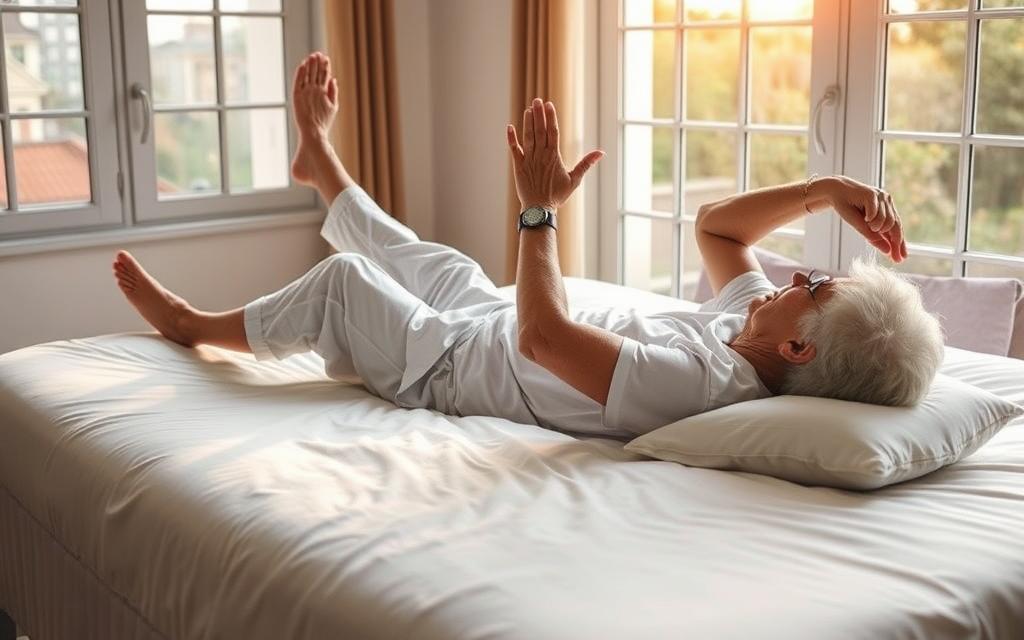
People with arthritis need to keep their joints moving. Try slowly tilting your head or rotating your wrists. These arthritis-friendly range of motion techniques are easy on your joints.
Stretching your fingers gently is also good. Open your fingers wide, then close them. Do this a few times to keep your hands flexible.
Gentle Stretches That Lubricate Stiff Joints
Adding gentle stretches to your bed routine can also help. Try lifting one leg a bit off the bed. Hold it for a few seconds, then lower it back down. This helps your hips and knees.
Shoulder rolls are another good stretch. Lie on your back and roll your shoulders forward and backward. This relaxes your shoulder muscles and makes them more flexible.
Doing these bed exercises for pain-free movement daily can really help your elderly joint health. Just a few minutes each day can make a big difference over time.
Calming Breath and Mindfulness Bed Exercises
Adding calming breaths and mindfulness to your bedtime can relax you deeply. These methods help reduce stress and improve sleep. They make you feel more relaxed and calm.
Diaphragmatic Breathing for Increased Oxygen and Energy
Diaphragmatic breathing, or belly breathing, uses your diaphragm to fill your lungs. It boosts oxygen and energy, helping you relax. To do it, put one hand on your belly and the other on your chest.
Inhale deeply through your nose, letting your belly rise. Your chest should not move. Then, exhale slowly through your mouth, letting your belly fall.
Tension Release Sequences for Better Sleep
Tension release sequences relax your muscles one by one. Start with your toes, tense them for a few seconds, then release. Move up your body, tensing and relaxing each part.
As you tense, hold your breath. When you release, exhale slowly. This method calms your mind and body, making you ready for sleep.
Using diaphragmatic breathing with tension release sequences can make you even more relaxed. Try these often to better your sleep and health.
Your Perfect 15-Minute Bed Exercise Routine
Creating a 15-minute bed exercise routine can boost your health. Tailor your exercises for morning, afternoon, and evening. This way, you get the most benefits and live better.
Morning, Afternoon, and Evening Mini-Routines
It’s key to have different routines for each time of day. Each should meet specific needs and goals.
Morning Routine: Start with gentle stretches. Do neck rolls, shoulder stretches, and leg lifts. This wakes up your muscles and improves flexibility.
Afternoon Routine: Do strengthening exercises to increase energy. Arm raises, chest presses with a pillow, and ankle circles work well.
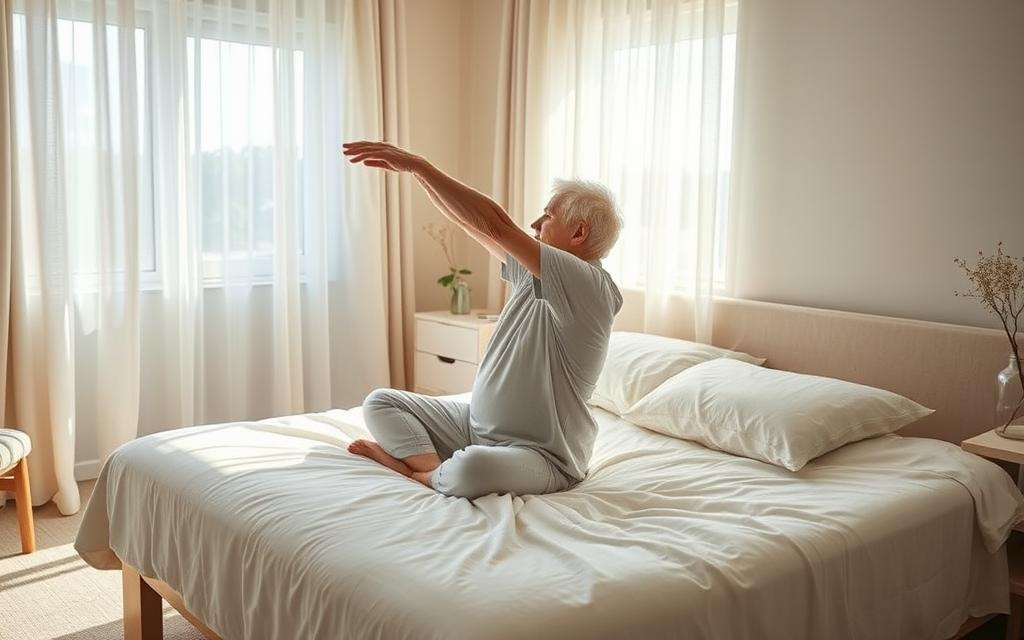
Evening Routine: Relax with exercises that help you sleep better. Try gentle spinal twists, deep breathing, and pelvic tilts. They calm your mind and body.
Tracking Your Progress with Simple Mobility Milestones
Tracking your progress keeps you motivated and on track. Simple mobility milestones help you see how far you’ve come. They also guide you in adjusting your routine.
| Milestone | Description | Target Date |
|---|---|---|
| Increased Range of Motion | Noticeable improvement in flexibility | Week 4 |
| Enhanced Strength | Ability to perform daily tasks with more ease | Week 6 |
| Improved Balance | Reduced risk of falls when getting out of bed | Week 8 |
Follow these milestones and adjust your routine as needed. This way, you’ll keep improving and enjoy your 15-minute bed exercises.
2025’s Innovative Tools for Enhanced Bed Workouts
Make your bed workouts better with new smart pillows, adaptive bedding, and virtual coaching apps. In 2025, staying fit from bed is easier than ever. It’s all thanks to new tech.
Smart Pillows and Adaptive Bedding for Exercise Support
The right bedding can really help your bed workouts. Smart pillows support your neck and head well. They adjust to fit you better, making your workouts more comfy and effective.
Adaptive bedding moves with you, giving support and stability. It’s great for seniors. It helps keep you balanced and safe while exercising in bed.
Virtual Coaching Apps Designed for Senior Bed Fitness
Virtual coaching apps change how seniors work out in bed. They give you workout plans, tips, and ways to track your progress. With customizable routines, you can stay on track and excited about your fitness.
These apps also have video tutorials to help you learn new moves. Virtual coaching makes your workouts better. It gives you the support and push you need to reach your fitness goals.
Using these new tools every day can really boost your bed workouts. You’ll get better at moving, get stronger, and feel better overall.
Conclusion: Your Bed, Your Gym, Your Future
Adding bed exercises for the elderly to your day can change your life. It boosts senior fitness and well-being. Gentle exercises help move better, avoid sores, and improve life quality.
Bed exercises for seniors are easy, safe, and work well. Just a few minutes each day can help you stay healthy and independent. They help with flexibility, strength, and balance.
Begin today and see the good changes for yourself. With regular practice, you’ll get healthier and more active. Turn your bed into a gym and start a brighter future.
Resources:
Senior Chair Exercises for Seniors: Best 10 Seated Chair Workouts
Tai Chi for Seniors: Unlock the Key to Vibrant Living