

← Back to Ultimate Hobbies for Seniors Guide
Adaptive Athletics: The Science of
Chair Volleyball for Seniors
Last Fact-Checked & Enhanced: April 10, 2026 | Reflecting 2026 Hobbies for Seniors & Community Trends
Executive Summary: Modern geriatric wellness emphasizes the importance of low-impact, high-engagement activities to preserve functional mobility. While many pursue traditional sports, chair volleyball for seniors has emerged as a premier clinical intervention for enhancing upper-body range of motion and social integration. This adaptive discipline is a featured highlight among our comprehensive guide to hobbies for seniors, providing a safe yet competitive environment that fosters both physical strength and cognitive reserve.
Author
Expert Verified
Strategic Highlights: Why Play?
- ✔ Enhanced Proprioception: Improves hand-eye coordination and spatial awareness while seated.
- ✔ Cardiovascular Efficiency: Boosts heart rate through sustained, low-impact lateral movements.
- ✔ Neuroplasticity Support: Rapid decision-making during play strengthens neural pathways.
- ✔ Inclusive Architecture: Designed to accommodate varying levels of physical ability and mobility aids.
The evolution of retirement wellness has shifted toward activities that minimize falls while maximizing exertion. Chair volleyball for seniors represents a perfect synthesis of these goals, allowing participants to engage in high-energy volleys without the orthopedic stress associated with jumping or running. This adaptive sport utilizes the biomechanics of seated rotation to target core muscle groups, ensuring that “active aging” is both safe and effective.
By maintaining a seated position, players significantly reduce the risk of equilibrium-related injuries, making this an accessible entry point for those exploring new physical outlets within our broader list of therapeutic hobbies.
Physiological & Cognitive Gains
via Chair Volleyball for Seniors
Engagement in this seated discipline triggers a variety of positive physiological responses. Beyond the obvious musculoskeletal benefits, the constant tracking of the ball provides essential visual-motor stimulation. This is a critical component in building cognitive reserve, which acts as a protective buffer against age-related memory decline.
Socially, the game operates as a powerful catalyst for geriatric wellness. The cooperative nature of a volleyball match fosters a “Dopamine Feedback Loop,” where team success and peer interaction combine to reduce markers of cortisol and combat social isolation. It is more than a game; it is a holistic communal intervention.
Technical Requirements for
Seated Competitive Play
To facilitate a successful match, specific environmental and material standards must be met. The infrastructure of the court ensures that the game remains fluid and that safety protocols are strictly maintained. Choosing the correct apparatus prevents repetitive motion strain and ensures long-term participation.
| Component | Specification | Clinical Benefit |
|---|---|---|
| Oversized Beach Ball | 20″ Diameter / Low PSI | Reduced impact force on arthritic joints. |
| Armless Stability Chairs | Wide Base / High Back Support | Unrestricted lateral range of motion. |
| Nets & Boundaries | 5-foot height / Visual Tape | Clear spatial cues for cognitive tracking. |
When preparing your facility, remember that ergonomic placement of seating is just as important as the ball itself. These technical adjustments ensure that the match aligns with the highest safety standards found across all senior athletic hobbies.
Ready to Explore More Wellness-Driven Hobby Activities?
Governing Dynamics: Official Mechanics
of Chair Volleyball for Seniors
The framework of this seated sport is intentionally structured to preserve the competitive spirit of traditional athletics while removing high-impact barriers. In chair volleyball for seniors, the primary technical divergence is the “Seated Contact Rule,” which mandates that at least one buttock remains in contact with the chair at all times. This ensures that the focus remains on torso rotation and arm extension rather than vertical jumping.
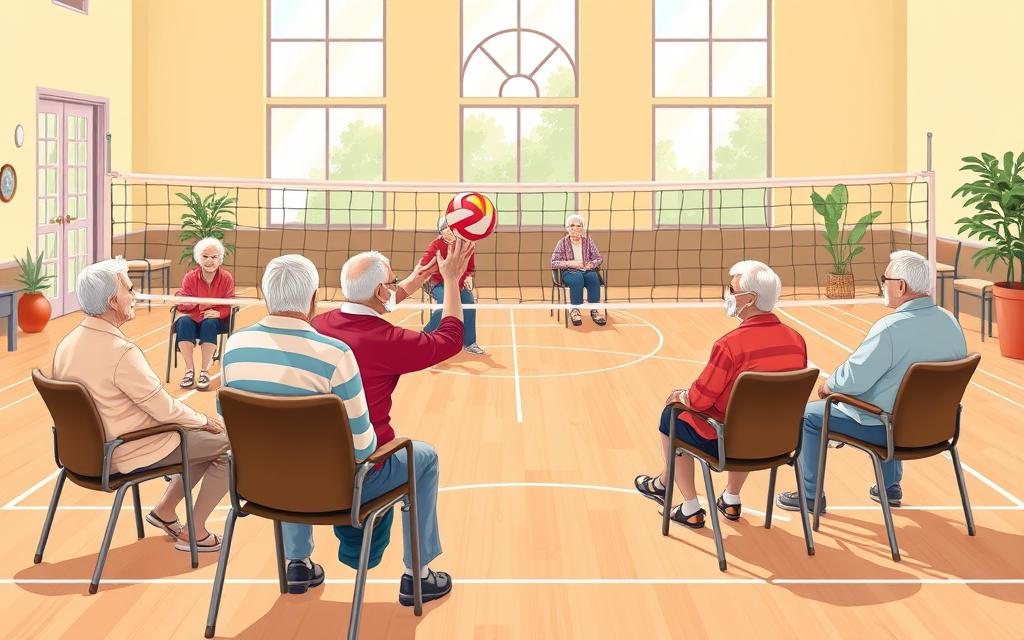
Scoring typically follows the “Rally Point” system, where a point is awarded on every serve regardless of which team initiated the play. By utilizing these standardized regulations, chair volleyball for seniors creates a predictable and safe environment for those transitioning from high-impact sports to more sustainable recreational hobbies.
Logistical Excellence:
Organizing Your Community Event
Successful event coordination requires a focus on universal accessibility. When selecting a venue, prioritize locations with ADA-compliant transitions and climate-controlled environments. A well-prepared space not only enhances player performance but also serves as a vital hub for fostering social integration and peer support.
| Recruitment Strategy | Target Demographic | Community Impact |
|---|---|---|
| Municipal Centers | Active local retirees | High-density local networking. |
| Digital Outreach | Tech-savvy older adults | Broad geographic engagement. |
| Resident Facilities | Assisted living residents | Enhanced onsite physical therapy. |
By carefully curating the atmosphere, you ensure that every participant feels a sense of belonging, a core pillar of our philosophy regarding wellness-based activities.
Creative Modalities to Maximize Engagement
To prevent “plateauing” in both physical and mental stimulation, incorporating diverse variations is highly recommended. Themed tournaments or costume-led matches add a layer of emotional wellness that traditional drills might lack. These modifications challenge the brain’s processing speed, providing a fun way to maintain neural plasticity.

Whether through holiday-themed events or “blind” volleys (using a sheet over the net), these variations ensure that the sport remains a dynamic part of a long-term strategy for active retirement hobbies.
Optimizing Performance: Conditioning for
Chair Volleyball for Seniors
To excel in this competitive environment, players should focus on specific upper-body conditioning and metabolic health. Strengthening the deltoids and pectorals through seated resistance training directly translates to more powerful serves. Furthermore, exercises that target proprioceptive reflexes help players react intuitively to fast-moving beach balls.
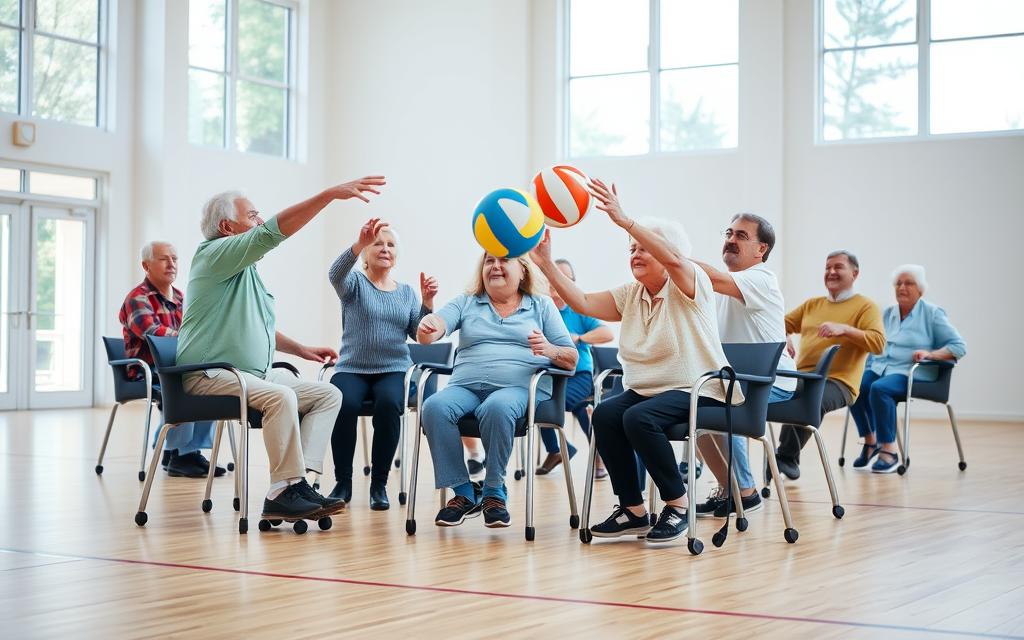
Integrating gentle warm-up cycles—such as shoulder circumduction and thoracic twists—is essential for injury prevention. By treating chair volleyball for seniors with the same rigor as any other athletic endeavor, participants can enjoy sustained physical autonomy and the numerous benefits of our recommended active living hobbies.
Cultivate Your Best Life Today
Chair volleyball is just one way to stay vibrant. Discover 60+ science-backed activities in our master guide.
Localization: Finding and Founding
Seated Athletics Groups
Identifying local opportunities for chair volleyball for seniors is a foundational step in your wellness journey. Most municipal senior centers and regional recreational facilities have recognized the significant health ROI of seated sports. These organizations frequently update their seasonal calendars to include competitive leagues that foster peer-to-peer engagement and physical resilience.
If a formal league does not currently exist in your immediate vicinity, many enthusiasts successfully establish their own community clusters. By leveraging local social media groups or community boards, you can aggregate interested participants to form a dedicated cohort. This proactive approach is a hallmark of the self-efficacy seen in many successful active retirement hobbies.
Conclusion:
The Future of Seated Wellness
As we progress through 2026, the adoption of chair volleyball for seniors continues to redefine the standards of geriatric recreation. This discipline proves that physical limitations do not necessitate a withdrawal from competitive play. Instead, through ergonomic adaptations and community support, older adults can maintain high levels of cardiovascular health and social connectivity.
By embracing this seated revolution, you are investing in a future of functional independence and joy. Whether you are aiming for improved mobility or simply seeking the camaraderie of a team, the court is waiting for you.
Ready to Expand Your Active Lifestyle?
Chair volleyball is just one facet of a vibrant retirement. Explore our full library of adaptive hobby activities and therapeutic interests.
Expert Resources & Related Wellness Guides
Tai Chi for Seniors
Complement your agility with the balance and cognitive flow of traditional Tai Chi movements.
Sitting Volleyball History
An overview of the Paralympic origins and technical evolution of seated competitive athletics.
Geriatric Physical Therapy
Explore NIH clinical studies on how upper-body resistance exercises impact cardiovascular longevity.
NCOA Wellness Programs
Evidence-based standards from the National Council on Aging for inclusive community programming.
Note: Seniors Life Hub provides these links to support the 2026 standards for adaptive geriatric athletics and rehabilitative science.
Clinical Volleyball Benefits
Peer-reviewed insights into why volleyball serves as an ideal activity for the aging population. EXTERNAL RESEARCH →
DoveMed Wellness Center
Detailed medical analysis of the metabolic and emotional health benefits of seated volleyball games. LEARN MORE →
Glossary of Adaptive Terms
To fully appreciate the mechanics of chair volleyball for seniors, it is helpful to understand the unique terminology used in adaptive sports and geriatric recreation.
Ambient Exercise: Physical activity that occurs naturally during play, such as the lateral reaching required in chair volleyball for seniors, which improves core stability.
Cognitive Reserve: The brain’s ability to improvise and find alternate ways of getting a job done; built through the rapid tactical decisions made during a live match.
Functional Range: The distance a player can safely reach in any direction while seated; a primary metric tracked to assess progress in chair volleyball for seniors.
Lateral Stabilization: The engagement of the oblique muscles and torso to maintain balance while reaching sideways for a volley.
Rally Point System: A scoring method where a point is awarded on every single serve, keeping the momentum high and the game engaging for all participants.
Social Integration: The process of building communal bonds through shared activities, a core benefit found in chair volleyball for seniors and other group-based hobbies for seniors.
Expert Insights:
Chair Volleyball for Seniors FAQ
What is chair volleyball, and how is it played?
Chair volleyball for seniors is an adaptive game played from a seated position. It utilizes a lightweight beach ball and follows standard volleyball rotations, allowing participants to stay active and socially engaged without orthopedic strain.
What are the health benefits of playing chair volleyball?
Engaging in chair volleyball for seniors enhances upper-body strength, improves cardiovascular health, and fosters social connectivity. These physiological gains contribute to greater functional independence and emotional wellness in older adults.
What equipment is needed to play chair volleyball?
The primary requirements are a high-visibility beach ball and stable, armless chairs. A clear court setup with marked boundaries ensures a safe environment for this competitive yet accessible geriatric wellness activity.
Can chair volleyball be adapted for different ability levels?
Yes. The rules can be modified to accommodate various mobility constraints, ensuring all participants can enjoy the sport. This inclusivity makes it a standout choice among wellness-driven hobbies for seniors.
How do I find chair volleyball groups near me?
Prospective players should consult local municipal recreation centers or search digital community boards. Establishing your own cohort is also a popular way to bring this sport to your immediate neighborhood or residential facility.
Are there any exercises that can improve my performance?
Targeted upper-body strengthening and gentle flexibility warm-ups are highly effective. Focusing on shoulder mobility and hand-eye coordination significantly boosts your competitive edge and safety on the seated court.
How can I organize a chair volleyball event?
Success involves securing a level venue, recruiting through senior networks, and fostering a supportive atmosphere. Incorporating fun themes and fair team distribution helps maximize the social impact of the match.
Is chair volleyball a competitive sport?
While primarily focused on recreation and health, the game can be as competitive as the players desire. It provides a structured outlet for athletic ambition within the safe confines of a seated athletic framework.
Looking for more ways to stay active? Explore our full guide to therapeutic hobbies.

About the Author: Barbara J. Dowling
With over 40 years of dedicated experience working one-on-one with senior citizens, Barbara J. Dowling is a leading voice in geriatric wellness, retirement planning, and government assistance.
As the founder and primary contributor to Seniors Life Hub, Barbara leverages her decades of firsthand insight to provide seniors and their families with practical, evidence-based guidance. Her mission is to ensure every individual navigates their golden years with the health, purpose, and joy they deserve. Chair volleyball for seniors is an excellent and health-enhancing hobby.



One thought on “Chair Volleyball for Seniors: Science-Backed Hobby Guide to Seated Athletics”
Comments are closed.